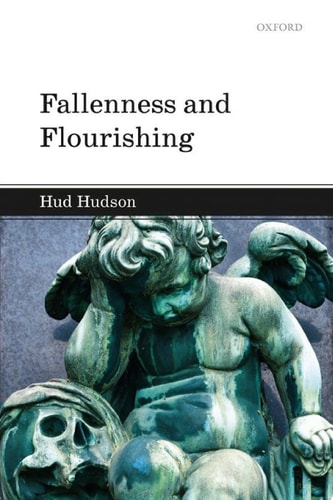
Fallenness and Flourishing
0
0
As an Amazon Associate and affiliate partner, Menrva Books earns from qualifying purchases. Learn more
Author Description
Fallenness and Flourishing opens with defenses of the philosophy of pessimism, first on secular grounds and then again on distinctively Christian grounds with reference to the fallenness of human beings. It then details traditional Christian reasons for optimism with which this philosophy of pessimism can be qualified. Yet even among those who accept the general religious worldview underlying this optimism, many nevertheless willfully resist the efforts required to cooperate with God and instead pursue happiness and well-being (or flourishing) on their own power. On the assumption that we can acquire knowledge in such matters, arguments are presented in favour of objective-list theories of well-being and the Psychic Affirmation theory of happiness, and the question 'How are people faring in this quest for self-achieved happiness and well-being?' is critically investigated. The unfortunate result is that nearly everywhere, people are failing. The causes of failure, it is argued, are found in the noetic effects of sin--especially in inordinate self-love and self-deception, but also in insufficient self-love--and such failure manifests both in widespread unhappiness and in that most misunderstood of the seven deadly sins, sloth. After a literary tour designed to reveal the many different ways that sloth can damage a life, Hud Hudson provides a constructive proposal for responding to this predicament featuring the virtue of obedience. This virtue is analysed, illustrated, and located in a new theory of well-being.
Menrva's Summary
THE THESIS
This book investigates the intersection of human fallenness and the pursuit of flourishing, specifically questioning why individuals frequently fail to achieve well-being despite the availability of Christian optimism. Hud Hudson, a professor of philosophy, utilizes the framework of analytic theology to synthesize secular and religious arguments regarding pessimism and human nature. He argues that the noetic effects of sin, particularly self-deception and sloth, serve as primary obstacles to genuine flourishing, ultimately proposing the virtue of obedience as a necessary corrective.
THE SCOPE MAP
What You Will Find
- Philosophical defenses of pessimism from both secular and Christian perspectives
- Objective-list theories of well-being and the Psychic Affirmation theory of happiness
- A critical analysis of the seven deadly sins, with a specific focus on sloth
- A constructive proposal for the role of obedience in human life
Scope Limits
- The text does not provide a comprehensive survey of all historical theological views on sin
- It does not offer a practical self-help guide for daily habit formation
THE AUTHORITY PERSPECTIVE
Scholars in the field of analytic theology identify this work as a rigorous contribution to the study of human nature and moral failure. Readers frequently note the academic density of the prose and the author's precise, logical approach to complex theological concepts.
Page Count:
231
Publication Date:
2021-01-01
Publisher:
OUP Oxford
ISBN-10:
0192588958
ISBN-13:
9780192588951
Religion
Philosophy
Analytic Theology
Christian ethics
well being
Theology
Metaphysics