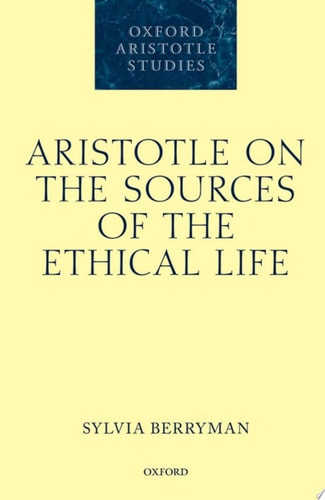
Aristotle on the Sources of the Ethical Life
0
0
As an Amazon Associate and affiliate partner, Menrva Books earns from qualifying purchases. Learn more
Author Description
Aristotle on the Sources of the Ethical Life challenges the common belief that Aristotle's ethics is founded on an appeal to human nature, an appeal that is thought to be intended to provide both substantive ethical advice and justification for the demands of ethics. Sylvia Berryman argues that this is not Aristotle's intent, while resisting the view that Aristotle was blind to questions of the source or justification of his ethical views. She interprets Aristotle's views as a 'middle way' between the metaphysical grounding offered by Platonists, and the scepticism or subjectivist alternatives articulated by others. The commitments implicit in the nature of action figure prominently in this account: Aristotle reinterprets Socrates' famous paradox that no-one does evil willingly, taking it to mean that a commitment to pursuing the good is implicit in the very nature of action.
Menrva's Summary
THE THESIS
This book investigates whether Aristotle’s ethical framework relies on an appeal to human nature to provide substantive advice and justification for moral demands. Sylvia Berryman, a scholar of ancient philosophy, examines the foundational logic of Aristotelian ethics by analyzing the relationship between action and the pursuit of the good. She argues that Aristotle avoids both the metaphysical grounding of Platonism and the pitfalls of subjectivism, proposing instead that the commitment to the good is inherent in the nature of human action itself.
THE SCOPE MAP
What You Will Find
- Analysis of the Socratic paradox regarding the nature of evil and voluntary action
- Examination of the relationship between metaphysical grounding and ethical justification
- Interpretive framework for Aristotle’s 'middle way' approach to moral philosophy
Scope Limits
- Does not provide a comprehensive survey of all Aristotelian ethical treatises
- Does not focus on modern applications of virtue ethics
THE AUTHORITY PERSPECTIVE
Scholars recognize this work as a nuanced contribution to the ongoing debate regarding the foundations of Aristotelian ethics. Readers frequently note the academic density of the prose, which is intended for advanced students and researchers in the field of ancient philosophy.
Page Count:
228
Publication Date:
2019-01-01
Publisher:
OUP Oxford
ISBN-10:
0192571923
ISBN-13:
9780192571922
Philosophy
Metaphysics
Ethics Ancient
Ethics
Aristotle
History & Surveys