
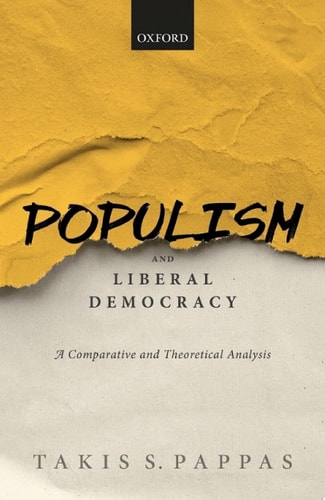
Populism and Liberal Democracy
0
0
As an Amazon Associate and affiliate partner, Menrva Books earns from qualifying purchases. Learn more
Author Description
Populism And Liberal Democracy Is The First Book To Offer A Comprehensive Theory About Populism During Both Its Emergence And Consolidation Phases In Three Geographical Regions: Europe, Latin America And The United States. Based On The Detailed Comparison Of All Significant Cases Of Populist Governments (including Argentina, Greece, Peru, Italy, Venezuela, Ecuador, Hungary, And The U.s.) And Two Cases Of Populist Failure (spain And Brazil), Each Of The Book's Seven Chapters Addresses A Specific Question: What Is Populism? How To Distinguish Populists From Non-populists? What Causes Populism? How And Where Does Populism Thrive? How Do Populists Govern? Who Is The Populist Voter? How Does Populism Endanger Democracy? If Rising Populism Is A Threat To Liberal Democratic Politics, As This Book Clearly Shows, It Is Only By Answering The Questions It Posits That Populism May Be Resisted Successfully.
Menrva's Summary
THE THESIS
This book investigates the mechanisms by which populism emerges, consolidates, and ultimately threatens the stability of liberal democratic institutions across diverse global contexts. Takis S. Pappas, a political scientist, utilizes a comparative framework to analyze populist governance and electoral success. By examining both successful populist regimes and instances of populist failure, the author constructs a systematic theory to explain the conditions that allow these movements to thrive and the specific ways they challenge democratic norms.
THE SCOPE MAP
What You Will Find
- Comparative analysis of populist governments in Europe, Latin America, and the United States.
- A diagnostic framework for identifying populist actors versus non-populist political figures.
- Empirical examination of voter demographics and the socio-political drivers of populist support.
- Case studies including Argentina, Greece, Peru, Italy, Venezuela, Ecuador, Hungary, the United States, Spain, and Brazil.
Scope Limits
- The analysis focuses primarily on the intersection of populism and liberal democracy rather than broader authoritarian or non-democratic regimes.
- The text does not provide a prescriptive policy manual for political parties but rather an analytical framework for understanding the phenomenon.
THE AUTHORITY PERSPECTIVE
Experts and political analysts recognize this work as a rigorous comparative study that provides a clear taxonomy for identifying populist movements. Readers frequently note the academic density of the prose, which serves as a foundational text for those seeking to understand the structural challenges populism poses to modern democratic systems.
Page Count:
336
Publication Date:
2019-01-01
Publisher:
Oxford University Press
ISBN-10:
0192574892
ISBN-13:
9780192574893
Populism
Comparative Politics
Government
Democracy
International relations
Community Tags
Other Editions(2)
Similar Books