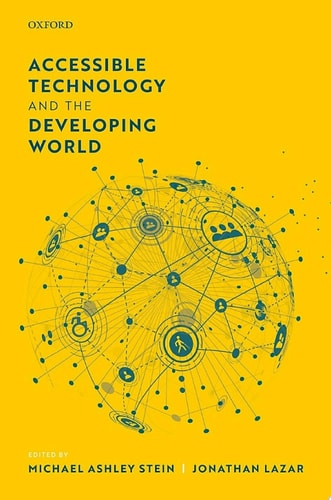
Accessible Technology and the Developing World
0
0
As an Amazon Associate and affiliate partner, Menrva Books earns from qualifying purchases. Learn more
Author Description
When digital content and technologies are designed in a way that is inaccessible for persons with disabilities, they are locked out of commerce, education, employment, and access to government information. In developing areas of the world, as new technical infrastructures are being built, it is especially important to ensure that accessibility is a key design goal. Unfortunately, nearly all research on Information and Communication Technology (ICT) accessibility and innovation for persons with disabilities-whether from the legal, technical, or development fields-has focused on developed countries, with very little being written about developing world initiatives. Accessible Technology and the Developing World aims to change this, by bringing increased attention to ICT accessibility in developing areas. This book brings together a unique combination of contributors with diverse disciplinary backgrounds, including authors from well-known non-governmental organizations, significant United Nations entities, and universities in both the developing and developed world. Together, they present a unique and much needed review of this critical and growing area of work, and primarily address three core themes - the lack of attention given to innovations taking place in the developing world, the need to ensure that infrastructures in the Global South do not present barriers to people with disabilities, and the need to exercise caution when applying techniques from the Global North to the Global South that won't transfer effectively. This book will be of use to researchers in the fields of civil rights, development studies, disability rights, disability studies, human-computer interaction and accessibility, human rights, international law, political science, and universal design.
Menrva's Summary
THE THESIS
This book investigates the critical need to integrate accessibility into the digital infrastructure of developing nations to prevent the exclusion of persons with disabilities from essential societal functions. The text compiles insights from a diverse group of contributors, including representatives from NGOs, the United Nations, and global academic institutions, to address the systemic oversight of accessibility initiatives in the Global South. By analyzing the limitations of applying Global North frameworks to developing regions, the authors provide a structured argument for localized, inclusive innovation.
THE SCOPE MAP
What You Will Find
- Analysis of ICT accessibility barriers in developing economies
- Frameworks for inclusive infrastructure design in the Global South
- Comparative studies of innovation strategies between developed and developing regions
- Multidisciplinary perspectives from law, human-computer interaction, and development studies
Scope Limits
- Does not provide a comprehensive technical manual for software coding
- Does not cover every specific regional policy in the Global South
THE AUTHORITY PERSPECTIVE
Experts identify this work as a foundational text for understanding the intersection of disability rights and international development. Readers frequently note the academic density of the prose and its utility as a primary resource for researchers in human rights and universal design.
Page Count:
379
Publication Date:
2021-01-01
Publisher:
OUP Oxford
ISBN-10:
0192585428
ISBN-13:
9780192585424
Accessibility
Human rights
Earth Sciences
International Development
Sociology
Technology