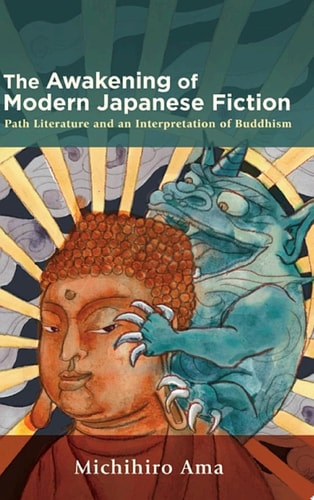
The Awakening of Modern Japanese Fiction
0
0
As an Amazon Associate and affiliate partner, Menrva Books earns from qualifying purchases. Learn more
Author Description
Argues that the role of Buddhism in modern Japanese prose literature has been significantly overlooked. The Awakening of Modern Japanese Fiction is the first book to treat the literary practices of certain major modern Japanese writers as Buddhist practices, and to read their work as Buddhist literature. Its distinctive contribution is its focus on modern literature and, importantly, modern Buddhism, which Michihiro Ama presents both as existing in continuity with the historical Buddhist tradition and as having unique features of its own. Ama corrects the dominant perception in which the Christian practice of confession has been accepted as the primary informing source of modern Japanese prose literature, arguing instead that the practice has always been a part of Shin Buddhist culture. Focusing on personal fiction, this volume explores the works of literary figures and Buddhist priests who, challenged by the modern development of Japan, turned to Buddhism in a variety of ways and used literature as a vehicle for transforming their sense of selfhood. Writers discussed include Natsume Sōseki, Tayama Katai, Shiga Naoya, Kiyozawa Manshi, and Akegarasu Haya. By bringing Buddhism out of the shadows of early twentieth-century Japanese literature and elucidating its presence in both individual authors' lives and the genre of autobiographical fiction, The Awakening of Modern Japanese Fiction demonstrates a more nuanced understanding of the role of Buddhism in the development of Japanese modernity.
Menrva's Summary
THE THESIS
This book investigates the overlooked role of Buddhism in the development of modern Japanese prose literature. It argues that key modern Japanese writers engaged with Buddhist practices, reading their works as Buddhist literature, and challenges the prevailing view that Christian confession was the primary influence. The study focuses on modern Buddhism, acknowledging its continuity with tradition while highlighting its unique modern characteristics, and examines how writers and priests used literature to transform their sense of selfhood in response to Japan's modernization.
THE SCOPE MAP
- Analysis of the role of Buddhism in modern Japanese prose literature.
- Examination of literary practices of major modern Japanese writers as Buddhist practices.
- Reading of selected works as Buddhist literature.
- Focus on modern Buddhism, its traditions, and its unique features.
- Correction of the perception of Christian confession as the primary informing source.
- Exploration of personal fiction and its connection to Shin Buddhist culture.
- Discussion of works by Natsume Sōseki, Tayama Katai, Shiga Naoya, Kiyozawa Manshi, and Akegarasu Haya.
- Demonstration of a nuanced understanding of Buddhism's role in Japanese modernity.
THE AUTHORITY PERSPECTIVE
This scholarly work is positioned as a significant contribution to the understanding of modern Japanese literature and its spiritual underpinnings. By focusing on the under-examined influence of Buddhism, it offers a fresh perspective that challenges existing critical frameworks. The book's detailed analysis of prominent authors and their engagement with Buddhist thought promises to provide a more nuanced appreciation of the cultural and intellectual landscape of early twentieth-century Japan.
Page Count:
354
Publication Date:
2021-02-01
Publisher:
State University of New York Press (SUNY Press)
ISBN-10:
1438481438
ISBN-13:
9781438481432
Non-Fiction
Literary Fiction
History
Literary Criticism
Modern
Japanese
Buddhism
Community Tags
Similar Books