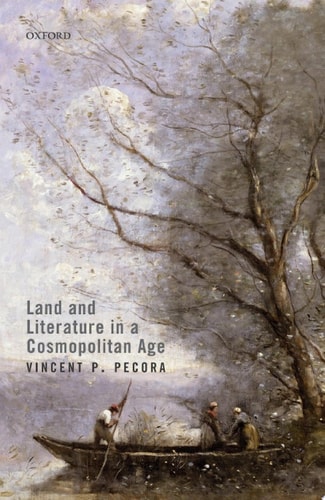
Land and Literature in a Cosmopolitan Age
0
0
As an Amazon Associate and affiliate partner, Menrva Books earns from qualifying purchases. Learn more
Author Description
European culture after the Franco-Prussian War of 1870-71 was no stranger to ancient beliefs in an organic, religiously sanctioned, and aesthetically pleasing relationship to the land. The many resonances of this relationship form a more or less coherent whole, in which the supposed cosmopolitanism of the modern age is belied by a deep commitment to regional, nationalist, and civilizational attachments, including a justifying theological armature, much of which is still with us today. This volume untangles the meaning of the vital geographies of the period, including how they shaped its literature and intellectual life.
Menrva's Summary
THE THESIS
This book investigates how the persistent belief in an organic, religiously sanctioned connection to the land challenged the perceived cosmopolitanism of European culture following the Franco-Prussian War. Vincent P. Pecora, a scholar of modern literature and culture, examines the intellectual and theological frameworks that underpinned regional and nationalist attachments during this era. He argues that these deep-seated attachments remained central to the period's literature and intellectual life, contradicting the narrative of a purely modern, globalized society.
THE SCOPE MAP
What You Will Find
- Analysis of post-1870 European cultural and intellectual history
- Examination of the theological justifications for regional and nationalist land attachments
- Critical readings of literature reflecting these vital geographies
Scope Limits
- The study focuses primarily on the period immediately following the Franco-Prussian War
- It does not provide a comprehensive survey of all European literature, focusing instead on specific intellectual currents
THE AUTHORITY PERSPECTIVE
Scholars recognize this work as a rigorous examination of the intersection between geography, theology, and literary production in late 19th-century Europe. Readers frequently note the academic density of the prose and the author's precise synthesis of historical and literary evidence.
Page Count:
309
Publication Date:
2020-01-01
Publisher:
OUP Oxford
ISBN-10:
0192593099
ISBN-13:
9780192593092
History
19th Century
Intellectual History
Literary Criticism
Nationalism
Literature
European History
Indigenous
Community Tags
Similar Books