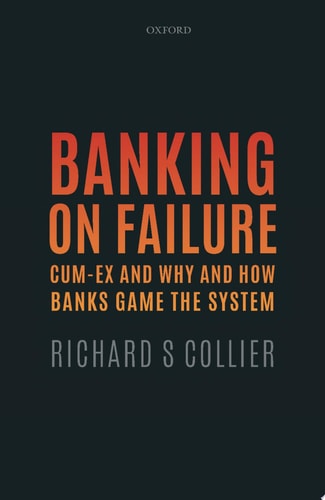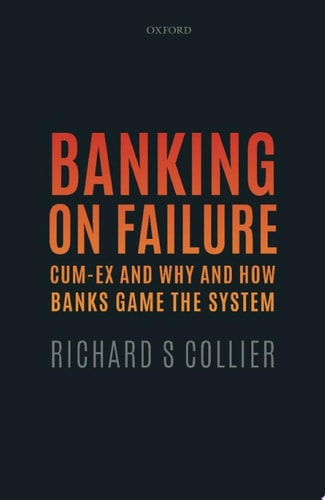
Banking on Failure: Cum-Ex and Why and How Banks Game the System
0
0
As an Amazon Associate and affiliate partner, Menrva Books earns from qualifying purchases. Learn more
Author Description
Banks seem all too often involved in cases of misconduct, particularly involving the exploitation of tax systems. Banking on Failure explains why and how banks "game the system", accounting for these misconduct cases and analysing the wider implications for financial markets and tax systems. Banking on Failure: Cum-Ex and Why and How Banks Game the System explains why banks design and use structured products to exploit tax systems. It describes one of the biggest and most complex cases - the "cum-ex" scandal - in which hundreds of banks and funds from across the globe participated in the raid on the public exchequers of a number of countries, with losses in the tens of billions of euros. The book then draws on the significance of this case study, and what this tells us about modern banks and their interactions with tax systems. Banking on Failure demonstrates why the exploitation of tax systems by banks is an inevitable feature of the financial markets landscape, and suggests possible responses.
Menrva's Summary
THE THESIS
This book investigates the systemic incentives and structural mechanisms that allow global financial institutions to exploit tax systems for profit. Richard J. Collier, an expert in international tax and financial regulation, utilizes the cum-ex scandal as a primary case study to illustrate the intersection of complex financial engineering and regulatory failure. He argues that the exploitation of tax loopholes is not an isolated anomaly but a predictable outcome of the current financial market landscape.
THE SCOPE MAP
What You Will Find
- Detailed analysis of the cum-ex trading scandal and its impact on public exchequers.
- Examination of how structured financial products are engineered to manipulate tax codes.
- Discussion of the systemic relationship between global banks and national tax authorities.
Scope Limits
- The text focuses primarily on European and global banking practices rather than individual retail banking.
- It does not provide a comprehensive legal defense for specific institutions involved in the scandal.
THE AUTHORITY PERSPECTIVE
Experts identify this work as a critical examination of the intersection between high-frequency finance and tax policy. Readers frequently note the technical density of the prose, which provides a rigorous account of how institutional incentives drive financial misconduct.
Page Count:
390
Publication Date:
2020-01-01
Publisher:
OUP Oxford
ISBN-10:
0192603477
ISBN-13:
9780192603470
Economics
Corporate governance
Finance
Banking
Tax Law