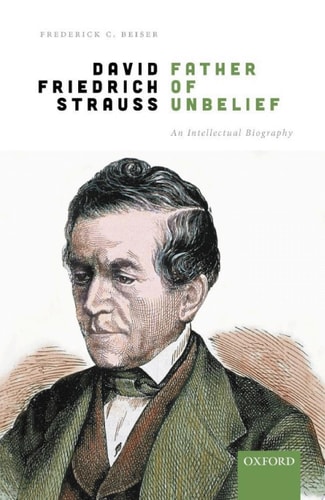
David Friedrich Strauß, Father of Unbelief: An Intellectual Biography
0
0
As an Amazon Associate and affiliate partner, Menrva Books earns from qualifying purchases. Learn more
Author Description
David Friedrich Strauss is a central figure in 19th century intellectual history. The first major source for the loss of faith in Christianity in Germany, his work Das Leben Jesu was the most scandalous publication in Germany during his time. His book was a critique of the claims to historical truth of the New Testament, which had been the mainstay of Protestantism since the Reformation. As the father of unbelief, his critique of Christianity preceded that of Nietzsche, Marx, Feuerbach, and Schopenhauer. His views imposed a harsh fate upon him - he was persecuted for his beliefs by religious and political authorities and was denied employment in the university and government, forcing him to live as a free-lance writer. He led a wandering and isolated life as an outcast. Here, Frederick C. Beiser studies the intellectual development of Strauss and recounts his fate, which began in faith as a young man but finally ended in unbelief.
Menrva's Summary
THE THESIS
This biography investigates the intellectual trajectory of David Friedrich Strauss, questioning how his radical critique of the New Testament catalyzed the decline of traditional Christian belief in 19th-century Germany. Professor Frederick C. Beiser, a scholar of German philosophy, utilizes primary source documents and historical context to trace Strauss's transition from a devout youth to a controversial figure of unbelief. The book examines the socio-political consequences of his work, Das Leben Jesu, and how his rejection of historical biblical truth led to his professional ostracization and personal isolation. Beiser provides a rigorous analysis of the philosophical climate that shaped Strauss's arguments and the subsequent backlash from religious and state authorities.
THE SCOPE MAP
What You Will Find
- Analysis of the intellectual climate in 19th-century Germany
- Detailed examination of the reception and impact of Das Leben Jesu
- Biographical account of Strauss's professional and personal struggles
- Contextualization of Strauss's work relative to later thinkers like Nietzsche and Marx
Scope Limits
- Does not provide a comprehensive theological rebuttal of Strauss's arguments
- Focuses primarily on intellectual development rather than an exhaustive personal diary or private correspondence
THE AUTHORITY PERSPECTIVE
Scholars recognize this work as a definitive intellectual biography that clarifies Strauss's pivotal role in the secularization of European thought. Readers frequently note the academic density of the prose, which is well-suited for those familiar with German philosophical history.
Page Count:
303
Publication Date:
2020-01-01
Publisher:
OUP Oxford
ISBN-10:
0192603671
ISBN-13:
9780192603678
Philosophy
Biography
19th Century
Intellectual History
Theology
German history
Community Tags
Similar Books