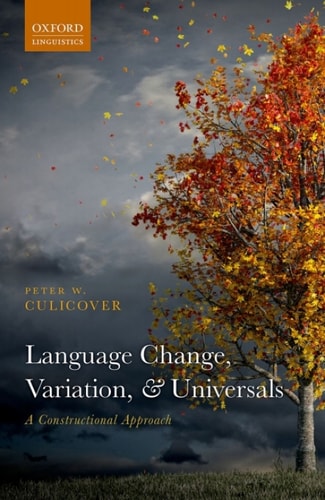
Language Change, Variation, and Universals
0
0
As an Amazon Associate and affiliate partner, Menrva Books earns from qualifying purchases. Learn more
Author Description
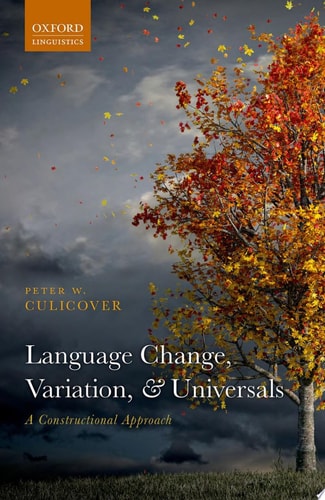
This volume explores how human languages become what they are, why they differ from one another in certain ways but not in others, and why they change in the ways that they do. Given that language is a universal creation of the human mind, the puzzle is why there are different languages at all: why do we not all speak the same language? Moreover, while there is considerable variation, in some ways grammars do show consistent patterns: why are languages similar in those respects, and why are those particular patterns preferred? Peter Culicover proposes that the solution to these puzzles is a constructional one. Grammars consist of constructions that carry out the function of expressing universal conceptual structure. While there are in principle many different ways of accomplishing this task, languages are under press to reduce constructional complexity. The result is that there is constructional change in the direction of less complexity, and grammatical patterns emerge that more efficiently reflect conceptual universals. The volume is divided into three parts: the first establishes the theoretical foundations; the second explores variation in argument structure, grammatical functions, and A-bar constructions, drawing on data from a variety of languages including English and Plains Cree; and the third examines constructional change, focusing primarily on Germanic. The study ends with observations and speculations on parameter theory, analogy, the origins of typological patterns, and Greenbergian 'universals'.
Menrva's Summary
THE THESIS
This volume investigates the mechanisms driving language variation and change, specifically addressing why human languages exhibit both universal patterns and significant structural differences. Peter W. Culicover, a prominent linguist, utilizes a constructional framework to argue that grammars are composed of constructions designed to express universal conceptual structures. He posits that languages evolve under pressure to reduce constructional complexity, leading to the emergence of grammatical patterns that more efficiently map onto these underlying universals.
THE SCOPE MAP
What You Will Find
- Theoretical foundations of constructional grammar
- Analysis of argument structure and A-bar constructions
- Comparative data from English and Plains Cree
- Examination of constructional change within Germanic languages
- Discussion on parameter theory and Greenbergian universals
Scope Limits
- The text does not provide an exhaustive survey of all global language families
- It does not focus on sociolinguistic or purely historical-philological accounts of language evolution
THE AUTHORITY PERSPECTIVE
Experts recognize this work as a significant contribution to the field of syntactic theory and constructional grammar. Readers frequently note the academic density of the prose, which is intended for advanced students and professional linguists.
Page Count:
336
Publication Date:
2021-01-01
Publisher:
OUP Oxford
ISBN-10:
0192634739
ISBN-13:
9780192634733
Grammar
English
English & College Success
Syntax
Typology
Linguistics