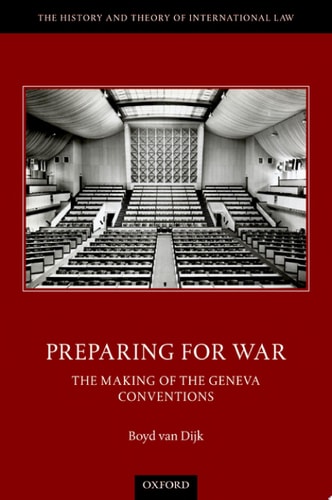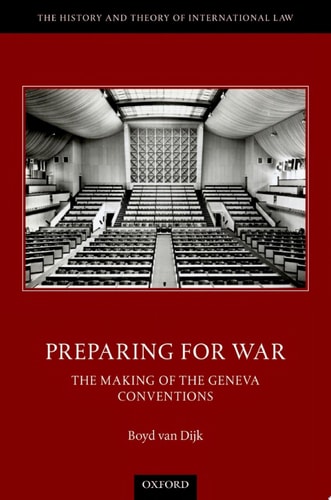
Preparing for War: The Making of the Geneva Conventions
0
0
As an Amazon Associate and affiliate partner, Menrva Books earns from qualifying purchases. Learn more
Author Description
The 1949 Geneva Conventions are the most important rules for armed conflict ever formulated. To this day they continue to shape contemporary debates about regulating warfare, but their history is often misunderstood. For most observers, the drafters behind these treaties were primarily motivated by liberal humanitarian principles and the shock of the atrocities of the Second World War. This book tells a different story, showing how the final text of the Conventions, far from being an unabashedly liberal blueprint, was the outcome of a series of political struggles among the drafters. It also concerned a great deal more than simply recognizing the shortcomings of international law revealed by the experience of war. To understand the politics and ideas of the Conventions' drafters is to see them less as passive characters responding to past events than as active protagonists trying to shape the future of warfare. In many different ways, they tried to define the contours of future battlefields by deciding who deserved protection and what counted as a legitimate target. Outlawing illegal conduct in wartime did as much to outline the concept of humanized war as to establish the legality of waging war itself. Through extensive archival research and critical legal methodologies, Preparing for War establishes that although they did not seek war, the Conventions' drafters prepared for it by means of weaving a new legal safety net in the event that their worst fear should materialize, a spectre still haunting us today.
Menrva's Summary
THE THESIS
This book investigates the political origins and strategic motivations behind the 1949 Geneva Conventions, challenging the common perception that they were purely humanitarian responses to the atrocities of World War II. Dr. Boyd van Dijk, a historian of international law, utilizes extensive archival research to argue that the drafters were active political agents who sought to define the parameters of future warfare. By analyzing the drafting process, the author demonstrates how these legal frameworks were designed to manage the legality of conflict while simultaneously establishing protections for specific categories of individuals.
THE SCOPE MAP
What You Will Find
- Analysis of the political negotiations and ideological conflicts among the 1949 drafters
- Examination of the legal mechanisms used to define legitimate targets and protected persons
- Historical context regarding the transition from wartime experience to post-war legal codification
Scope Limits
- The text does not provide a comprehensive history of all international humanitarian law prior to the 20th century
- It focuses primarily on the drafting process rather than the subsequent enforcement or practical application of the Conventions in modern conflicts
THE AUTHORITY PERSPECTIVE
Scholars and legal historians recognize this work as a significant revisionist account that complicates the traditional liberal narrative surrounding international humanitarian law. Readers frequently note the academic density of the prose and the depth of the archival evidence presented throughout the analysis.
Page Count:
392
Publication Date:
2022-01-01
Publisher:
OUP Oxford
ISBN-10:
0192638394
ISBN-13:
9780192638397
History
Professional Career & Trade
Military History
International Law