Philanthropy and the Development of Modern India: In the Name of Nation
0
0
As an Amazon Associate and affiliate partner, Menrva Books earns from qualifying purchases. Learn more
Author Description
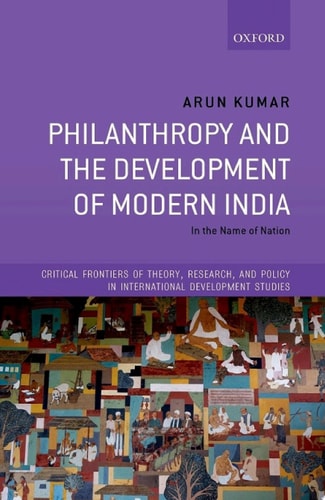
Drawing on the history of the philanthropy of India's economic elites, Arun Kumar discusses how their ideas and understanding of development have shifted and changed over time. Going beyond the more familiar criticisms of development's entanglements with colonialism, Kumar interrogates the changes in development imaginaries in terms of modernity's entanglements with the national question, including anti-colonial nationalism and post-colonial nation-building during the twentieth century. Development, he suggests, can be usefully read and critiqued as national-modern. Philanthropy and the Development of Modern India plots the careers of the national-modern in four main sites of development: civil society, community, science and technology, and selfhood. In an unusual move reading socio-economic nationalist reform from the first half of the twentieth century alongside post-colonial development from the second half, Kumar uncovers the lineages of contemporary development ideas such as self-care, self-reliance, merit, etc. In all this, elites were driven by a 'pedagogic reflex': to teach different sections of Indian society of how to be modern and developed. Contrary to development studies' characterization of elites as anti-development or captors of scarce resources, Kumar shows how elites longed for development for others. Development provided the moral justification, in their calculations, for protecting their commercial interests as they navigated the turbulent Indian twentieth century.
Menrva's Summary
THE THESIS
This book investigates how the philanthropic activities of India's economic elites shaped the nation's development trajectory and modern identity throughout the twentieth century. Arun Kumar, a scholar in development studies, utilizes historical analysis to challenge conventional critiques of elite involvement in national progress. He argues that development served as a 'national-modern' project, where elites employed a 'pedagogic reflex' to mold society while simultaneously securing their own commercial interests.
THE SCOPE MAP
What You Will Find
- Historical analysis of Indian economic elites from the early to late twentieth century.
- Examination of four development sites: civil society, community, science and technology, and selfhood.
- Theoretical framework linking anti-colonial nationalism with post-colonial nation-building.
Scope Limits
- The text focuses primarily on elite perspectives and does not provide an exhaustive account of grassroots or subaltern development movements.
- It does not offer a comprehensive economic history of India, but rather a history of development ideas and imaginaries.
THE AUTHORITY PERSPECTIVE
Scholars in development studies recognize this work as a nuanced contribution to the history of ideas, particularly for its departure from standard elite-capture narratives. Readers frequently note the academic density of the prose, which is best suited for researchers and students of post-colonial development theory.
Page Count:
227
Publication Date:
2021-01-01
Publisher:
OUP Oxford
ISBN-10:
019263920X
ISBN-13:
9780192639202
History
Philanthropy
Sociology
India
Community Tags
Similar Books