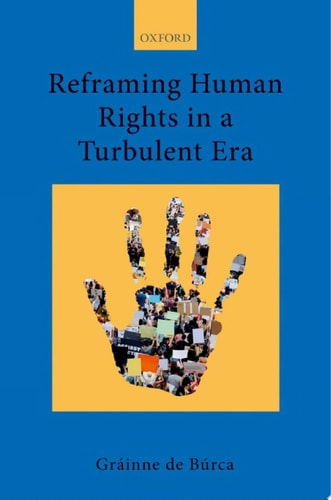
Reframing Human Rights in a Turbulent Era
0
0
As an Amazon Associate and affiliate partner, Menrva Books earns from qualifying purchases. Learn more
Author Description
In recent years, human rights have come under fire, with the rise of political illiberalism and the coming to power of populist authoritarian leaders in many parts of the world who contest and dismiss the idea of human rights. More surprisingly, scholars and public intellectuals, from both the progressive and the conservative side of the political spectrum, have also been deeply critical, dismissing human rights as flawed, inadequate, hegemonic, or overreaching. While acknowledging some of the shortcomings, this book presents an experimentalist account of international human rights law and practice and argues that the human rights movement remains a powerful and appealing one with widespread traction in many parts of the globe. Using three case studies to illuminate the importance and vibrancy of the movement around the world, the book argues that its potency and legitimacy rest on three main pillars: First, it is based on a deeply-rooted and widely appealing moral discourse that integrates the three universal values of human dignity, human welfare, and human freedom. Second, these values and their elaboration in international legal instruments have gained widespread - even if thin - agreement among states worldwide. Third, human rights law and practice is highly dynamic, with human rights being activated, shaped, and given meaning and impact through the on-going mobilization of affected individuals and groups, and through their iterative engagement with multiple domestic and international institutions and processes. The book offers an account of how the human rights movement has helped to promote human rights and positive social change, and argues that the challenges of the current era provide good reasons to reform, innovate, and strengthen that movement, rather than to abandon it or to herald its demise.
Menrva's Summary
THE THESIS
This book investigates whether the international human rights movement remains a legitimate and effective framework for social change despite rising global criticism and political illiberalism. Gráinne de Búrca, a scholar of European and international law, utilizes an experimentalist legal framework to analyze the current state of human rights. She argues that the movement's continued relevance is anchored in its moral discourse, international consensus, and the dynamic, iterative engagement of activists with institutional processes.
THE SCOPE MAP
What You Will Find
- An experimentalist account of international human rights law and practice.
- Analysis of three specific case studies demonstrating the movement's global vibrancy.
- A breakdown of the three pillars of human rights legitimacy: moral discourse, state agreement, and iterative mobilization.
Scope Limits
- The text does not provide a comprehensive history of every human rights treaty.
- It does not offer a detailed critique of every specific authoritarian regime currently in power.
THE AUTHORITY PERSPECTIVE
Experts view this work as a significant contribution to the ongoing debate regarding the efficacy of international human rights institutions. Readers frequently note the academic density of the prose, which is intended for legal scholars, policy makers, and students of international relations.
Page Count:
241
Publication Date:
2021-01-01
Publisher:
OUP Oxford
ISBN-10:
019264033X
ISBN-13:
9780192640338
Human rights
International Law
Law
Sociology
Globalization
Professional Career & Trade
Community Tags
Other Editions(3)
Similar Books




Reader Comments
Share Your Thoughts
No comments yet. Be the first to share your thoughts!