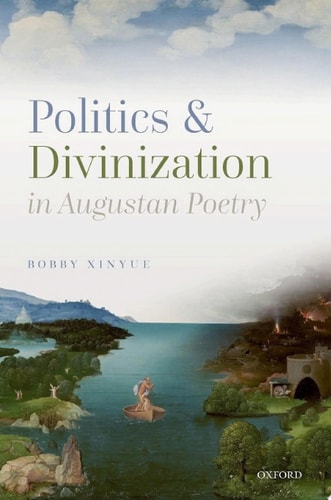
Politics and Divinization in Augustan Poetry
0
0
As an Amazon Associate and affiliate partner, Menrva Books earns from qualifying purchases. Learn more
Author Description
Politics and Divinization in Augustan Poetry offers a new interpretation of one of the most prominent themes in Latin poetry, the divinization of Augustus, and argues that this theme functioned as a language of political science for the early Augustan poets as they tried to come to terms with Rome's transformation from Republic to Principate. Examining an extensive body of texts ranging from Virgil's Eclogues to Horace's final book of the Odes (covering a period roughly from 43 BC to 13 BC), this study highlights the multifaceted metaphorical force of divinizing language, as well as the cultural complications of divinization. Through a series of close readings, this book challenges the view that poetic images of Augustus' divinization merely reflect the poets' attitude towards Augustus or their recognition of his power, and puts forward a new understanding of this motif as an evolving discourse through which the first generation of Augustan poets articulated, interrogated, and negotiated Rome's shift towards authoritarianism.
Menrva's Summary
THE THESIS
This study investigates how the divinization of Augustus in Latin poetry functioned as a sophisticated language of political science during Rome's transition from Republic to Principate. Bobby Xinyue, a scholar of classical literature, utilizes a framework of political discourse analysis to examine how poets navigated the shift toward authoritarianism. By analyzing the metaphorical weight of divine imagery, the author argues that these poetic motifs were not merely expressions of loyalty but active tools for interrogating the changing power structures of the era.
THE SCOPE MAP
What You Will Find
- Analysis of Latin poetic texts from 43 BC to 13 BC
- Close readings of Virgil's Eclogues and Horace's Odes
- A framework for interpreting divinization as political discourse
Scope Limits
- The study focuses primarily on the first generation of Augustan poets
- It does not provide a comprehensive biography of Augustus or a general history of the Roman Empire
THE AUTHORITY PERSPECTIVE
Scholars recognize this work as a significant contribution to the study of Augustan literature and political rhetoric. Readers frequently note the academic density of the prose, which is tailored for those with a background in classical studies and Latin poetry.
Page Count:
251
Publication Date:
2022-01-01
Publisher:
OUP Oxford
ISBN-10:
019266848X
ISBN-13:
9780192668486
History
Poetry
Literary Criticism
English
English & College Success
Ancient - Rome