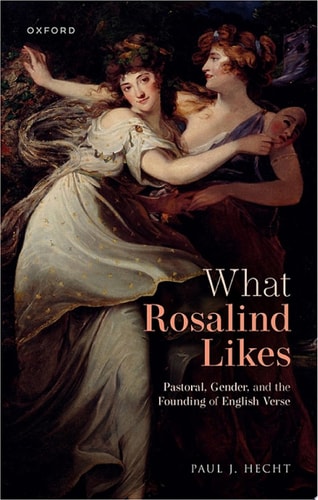
What Rosalind Likes: Pastoral, Gender, and the Founding of English Verse
0
0
As an Amazon Associate and affiliate partner, Menrva Books earns from qualifying purchases. Learn more
Author Description
What Rosalind Likes begins with the strange ferocity of Elizabethan responses to poetry: a woman named Rosalind expresses scorn for a shepherd's poems, and a character in a play loses his temper and storms off stage at the sound of a blank verse line. What are these people so angry about? Thus begins a journey into a world where the details of poetic form and vagaries of Latin translation are caught up in the dynamics of gender, sexuality, class, and race, and power, where too much alliteration, for example, could destabilize your gender or pose a threat to national security. Situated in the crucial final two decades of the sixteenth century, What Rosalind Likes takes three figures named "Rosalind" in works by Spenser (The Shepheardes Calender), Lodge (Rosalynde), and Shakespeare (As You Like It) to create a new approach to literary history and feminist criticism. The development and emergence of Rosalind as one of the most famous and beloved characters in the Shakespeare canon is thus connected to the troubled history of Virgilian reception, to tensions between aesthetics and sexual empowerment and powerlessness, to methodology associated with postcritique, including surface reading and the valorization of negative emotions, and to queer theology. The book ends by thinking about Rosalind with respect to the poetry of Mary Wroth, and examining depictions of Rosalind on stage and screen by Dora Jordan and Katharine Hepburn.
Menrva's Summary
THE THESIS
This work investigates how the figure of Rosalind in Elizabethan literature serves as a focal point for understanding the intersection of poetic form, gender dynamics, and political power. Paul J. Hecht, a scholar of early modern literature, utilizes a methodology rooted in postcritique and queer theology to analyze how the reception of Virgil and the development of English verse were inextricably linked to social anxieties regarding class, race, and sexuality. By examining the specific iterations of Rosalind in the works of Spenser, Lodge, and Shakespeare, the author argues that poetic aesthetics were not merely decorative but were active sites of cultural and gendered negotiation.
THE SCOPE MAP
What You Will Find
- Analysis of Rosalind figures in Spenser's The Shepheardes Calender, Lodge's Rosalynde, and Shakespeare's As You Like It.
- Application of postcritique methodologies, including surface reading and the study of negative emotions.
- Exploration of the reception of Virgilian pastoral poetry in the late sixteenth century.
- Discussion of later cultural depictions of Rosalind, including performances by Dora Jordan and Katharine Hepburn.
Scope Limits
- The analysis is primarily restricted to the final two decades of the sixteenth century, with limited focus on broader historical periods outside of the specific reception of these texts.
THE AUTHORITY PERSPECTIVE
Scholars in the field of Renaissance studies identify this text as a nuanced contribution to the intersection of formalist analysis and gender theory. Readers frequently note the academic density of the prose and the author's rigorous application of postcritique frameworks to canonical Elizabethan literature.
Page Count:
300
Publication Date:
2022-01-01
Publisher:
OUP Oxford
ISBN-10:
0192671480
ISBN-13:
9780192671486
Poetry
History
English literature
Indigenous
Feminist Theory
Literary Criticism
Community Tags
Similar Books