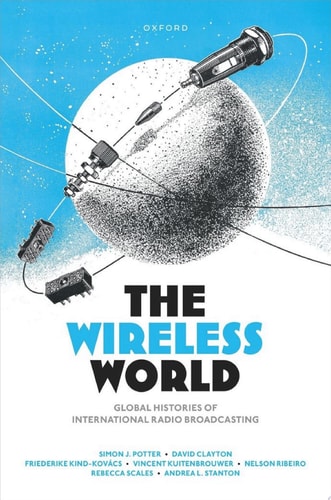
The Wireless World: Global Histories of International Radio Broadcasting
0
0
As an Amazon Associate and affiliate partner, Menrva Books earns from qualifying purchases. Learn more
Author Description
The Wireless World sets out a new research agenda for the history of international broadcasting, and for radio history more generally. It examines global and transnational histories of long-distance wireless broadcasting, combining perspectives from international history, media and cultural history, the history of technology, and sound studies. It is a co-written book, the result of more than five years of collaboration. Bringing together their knowledge of a wide range of different countries, languages, and archives, the co-authors show how broadcasters and states deployed international broadcasting as a tool of international communication and persuasion. They also demonstrate that by paying more attention to audiences, programmes, and soundscapes, historians of international broadcasting can make important contributions to wider debates in social and cultural history. Exploring the idea of a 'wireless world', a globe connected, both in imagination and reality, by radio, The Wireless World sheds new light on the transnational connections created by international broadcasting. Bringing together all periods of international broadcasting within a single analytical frame, including the pioneering days of wireless, the Second World War, the Cold War, and the decades since the fall of the Berlin Wall, the study reveals key continuities and transformations. It looks at how wireless was shaped by internationalist ideas about the use of broadcasting to promote world peace and understanding, at how empires used broadcasting to perpetuate colonialism, and at how anti-colonial movements harnessed radio as a weapon of decolonization.
Menrva's Summary
THE THESIS
This work investigates how international radio broadcasting functioned as a critical tool for communication, persuasion, and geopolitical influence across the twentieth and twenty-first centuries. The authors, a collaborative team of historians and media scholars, utilize a transnational framework to analyze how states and non-state actors deployed wireless technology to shape global perceptions. By synthesizing archival research from diverse linguistic and national contexts, the text argues that radio broadcasting was central to both imperial maintenance and anti-colonial resistance.
THE SCOPE MAP
What You Will Find
- Analysis of international broadcasting from the early wireless era through the post-Cold War period.
- Examination of radio as a tool for both peace-building initiatives and colonial propaganda.
- Case studies on the role of radio in decolonization movements and ideological conflicts.
Scope Limits
- The study does not provide a comprehensive technical manual on radio transmission hardware.
- It does not focus on domestic radio broadcasting outside of its international or transnational implications.
THE AUTHORITY PERSPECTIVE
Scholars in the field of media history recognize this text as a significant collaborative effort that bridges the gap between technological history and international relations. Readers frequently note the academic density of the prose, which serves as a foundational resource for researchers examining the intersection of sound studies and global political history.
Page Count:
307
Publication Date:
2022-01-01
Publisher:
OUP Oxford
ISBN-10:
0192688413
ISBN-13:
9780192688415
History
Media Studies
Technology history
Communication
Modern History
International relations
Cultural History
Community Tags
Similar Books







Reader Comments
Share Your Thoughts
No comments yet. Be the first to share your thoughts!