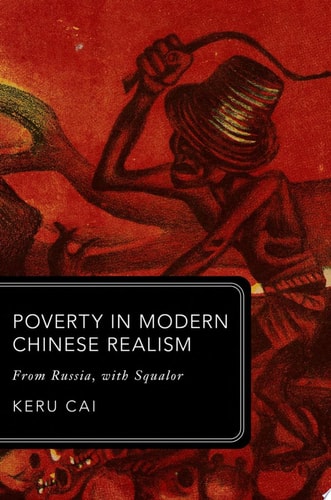
Poverty in Modern Chinese Realism
0
0
As an Amazon Associate and affiliate partner, Menrva Books earns from qualifying purchases. Learn more
Author Description
Poverty in Modern Chinese Realism shows that early twentieth century Chinese writers drew upon Russian texts about the socially downtrodden to describe poverty, in a bid to enrich Chinese culture by creating a syncretic new realism. Modern Chinese realist writers turned to the topic of material poverty—peasants suffering from famine, exploited urban laborers, homeless orphans—to convey their sense of textual poverty and national backwardness. The combination of a radically new subject matter and experimentation with diverse literary resources, indigenous and foreign, generated major innovations in narrative technique. Depicting poverty allowed writers to revolutionize the nascent forms of modern Chinese narrative, innovating strategies of representing the nation, the social other, time, and space, while problematizing their deployment of squalor for aesthetic purposes. This book examines why Russian literature, itself long preoccupied with a problem of belatedness vis-à-vis Western Europe, occupied a privileged place for Chinese intellectuals of this era. Comparing Chinese fiction about poverty to Russian intertexts by Gogol, Andreev, Chekhov, Turgenev, and others, the book shows how Chinese writers drew and innovated upon themes (such as madness or human animality) and formal elements (such as metonymy). Keru Cai's multi-scalar approach emphasizing close textual analysis situates modern Chinese realism in the trans-Eurasian axis of world literature.
Menrva's Summary
THE THESIS
This book investigates how early twentieth-century Chinese writers utilized Russian literary traditions to depict poverty and foster a syncretic Chinese realism. The author demonstrates that Chinese realists focused on material poverty—ranging from famine-stricken peasants to exploited urban laborers and homeless orphans—as a means to articulate their own sense of textual and national deficiency. By integrating diverse literary resources, both indigenous and foreign, these writers achieved significant innovations in narrative technique, revolutionizing modern Chinese narrative forms and developing new strategies for representing the nation, the social 'other,' time, and space, while simultaneously questioning their aesthetic use of destitution. The study specifically explores why Russian literature, which itself grappled with a sense of belatedness relative to Western Europe, held such importance for Chinese intellectuals of the era.**
THE SCOPE MAP
- Analysis of how early 20th-century Chinese writers drew upon Russian literary texts concerning the socially downtrodden.
- Examination of the use of material poverty (famine, labor exploitation, orphanhood) as a theme in modern Chinese realism.
- Exploration of how depicting poverty served to convey a sense of textual poverty and national backwardness.
- Discussion of narrative technique innovations driven by new subject matter and diverse literary experimentation.
- Comparison of Chinese fiction about poverty with Russian intertexts by authors such as Gogol, Andreev, Chekhov, and Turgenev.
- Identification of specific themes (madness, human animality) and formal elements (metonymy) adopted and adapted by Chinese writers.
- Situating modern Chinese realism within a trans-Eurasian axis of world literature through a multi-scalar approach.
- Critique of the aesthetic deployment of squalor and the problematization of representation strategies.
THE AUTHORITY PERSPECTIVE
The book examines the intricate relationship between Russian literary influences and the development of Chinese realism, focusing on the thematic and formal innovations employed by Chinese writers to depict poverty. It highlights how this engagement with Russian literature allowed for a revolution in narrative techniques and a re-evaluation of national identity and cultural belatedness. The study's comparative approach, analyzing specific intertexts and literary devices, positions modern Chinese realism within a broader global literary context. The multi-scalar analysis emphasizes close textual readings to underscore the syncretic nature of this literary movement.
Page Count:
240
Publication Date:
2025-04-28
Publisher:
Oxford University Press Academic UK
ISBN-10:
0198947070
ISBN-13:
9780198947073
Non-Fiction
History
Literary Criticism
Chinese
Community Tags
Similar Books