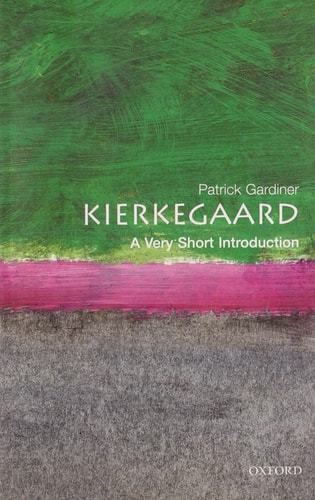
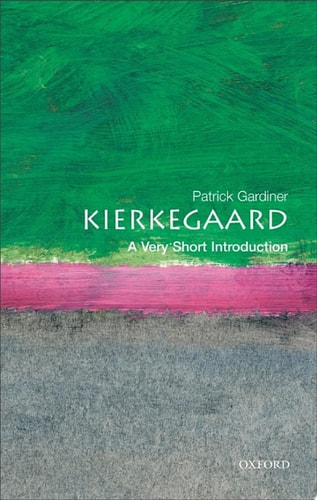
Kierkegaard: A Very Short Introduction
0
0
As an Amazon Associate and affiliate partner, Menrva Books earns from qualifying purchases. Learn more
Author Description
Scholars have largely misunderstood Soren Kierkegaard, remembering him chiefly in connection with the development of existentialist philosophy in this century. In a short and unhappy life, he wrote many books and articles on literary, satirical, religious and psychological themes, but the diversity and idiosyncratic style of his writing have contributed to a misunderstanding of his ideas. In this book--the only introduction to the full range of Kierkegaard's thought--Patrick Gardiner demonstrates how Kierkegaard developed his ideas and examines his thoughts in light of the doctrines on society developed by his contemporaries Marx and Feuerbach. Finally, he assesses the profound importance of Kierkegaard's ideas on the development of modern ways of thinking.
Menrva's Summary
THE THESIS
How can the diverse and often misunderstood body of work produced by Søren Kierkegaard be synthesized into a coherent philosophical framework? Patrick L. Gardiner, a noted scholar of 19th-century philosophy, addresses the common reduction of Kierkegaard to a mere precursor of existentialism. By examining the author's literary, religious, and psychological output, Gardiner argues that Kierkegaard's thought is best understood through the lens of his specific historical context and his critical engagement with contemporaries such as Marx and Feuerbach.
THE SCOPE MAP
What You Will Find
- An overview of Kierkegaard's literary, satirical, and religious writings
- A comparative analysis of Kierkegaard against the social doctrines of Marx and Feuerbach
- An assessment of Kierkegaard's influence on modern intellectual history
Scope Limits
- Does not provide an exhaustive line-by-line commentary on every individual work
- Does not focus on biographical minutiae outside of their relevance to his philosophical development
THE AUTHORITY PERSPECTIVE
Experts frequently cite this work as a foundational, accessible entry point for those seeking to understand the breadth of Kierkegaard's intellectual project. Readers often note that the prose is clear and avoids unnecessary jargon, making it a standard text for students of philosophy.
Page Count:
144
Publication Date:
2002-01-01
Publisher:
Oxford University Press
ISBN-10:
0192802569
ISBN-13:
9780192802569
Non-Fiction
Philosophy
Biography
Existentialism
19th Century
Community Tags
Other Editions(3)

Similar Books