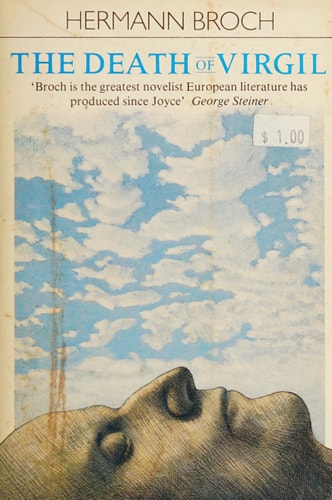
The Death of Virgil
0
0
As an Amazon Associate and affiliate partner, Menrva Books earns from qualifying purchases. Learn more
Author Description
426p white paperback, pages tanned to edges, otherwise clean and firm
Menrva's Summary
THE PULSE
As the Roman poet Virgil lies dying in the harbor of Brundisium, he grapples with the decision to destroy his life's work, the Aeneid, before his impending death. Virgil is attended by the Emperor Augustus, who seeks to preserve the epic poem as a monument to the Roman state. The protagonist experiences a profound internal conflict between his artistic integrity and the political utility of his writing. The narrative framework utilizes a dense, stream-of-consciousness style that shifts between the poet's fevered hallucinations and his philosophical reflections on the nature of existence. The world is constrained by the physical decay of the poet's body and the rigid expectations of the imperial court.
INSIDE THE PAGES
- Extensive use of stream-of-consciousness narrative technique
- Philosophical inquiries into the purpose of art and beauty
- Exploration of the tension between the individual and the state
- Non-linear progression of time through memory and hallucination
- Detailed sensory descriptions of the harbor of Brundisium
- Introspective dialogue between Virgil and Augustus
- Examination of the ethical implications of literary creation
- Stylistic focus on long, rhythmic, and complex sentence structures
THE COLLECTIVE ECHO
Discussion often centers on the extreme density of the prose and the author's commitment to capturing the final hours of a consciousness in transition. Readers frequently highlight the challenging nature of the text, noting that it requires significant patience to navigate the long, lyrical passages. Critics often analyze the work as a meditation on the failure of art to fully capture reality or to influence the political sphere. Many readers find the atmosphere to be immersive and somber, reflecting the gravity of the poet's final existential crisis. The book is widely regarded as a significant example of high modernist experimentation in the twentieth century.
Page Count:
442
Publication Date:
1983-01-01
Publisher:
Oxford University Press
ISBN-10:
0192813870
ISBN-13:
9780192813879
Historical Fiction
Literary Fiction
Modernist
Philosophical
British & Irish
Experimental