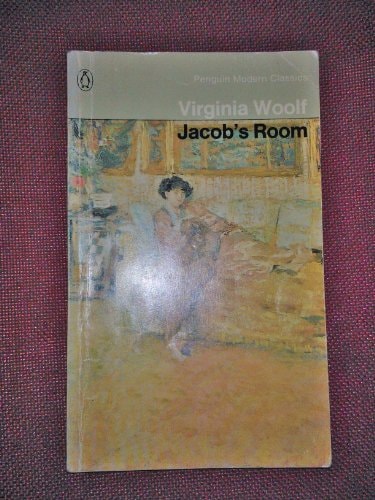
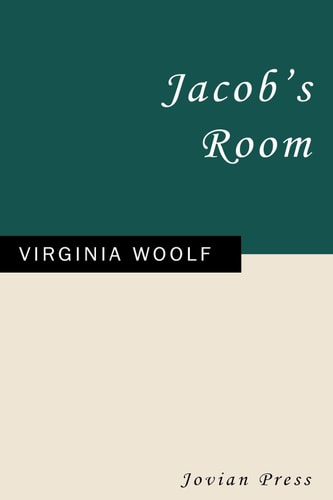
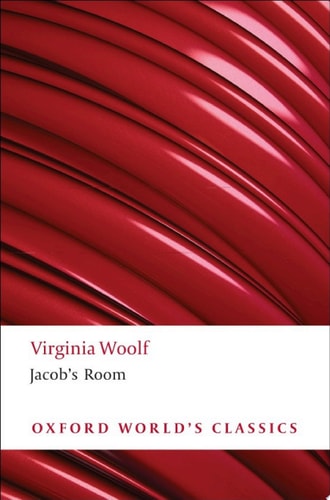
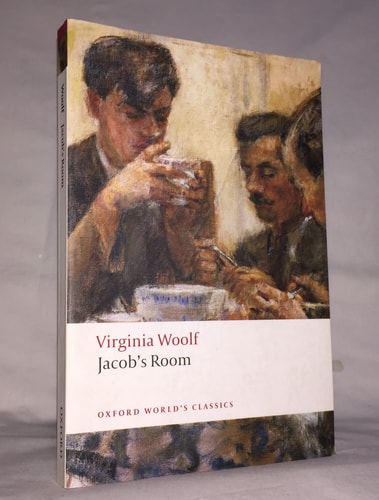
Jacob's Room
0
0
As an Amazon Associate and affiliate partner, Menrva Books earns from qualifying purchases. Learn more
Author Description
Jacob's Room, Virginia Woolf's third novel, was first published in 1922. Here we find her beginning to part company with the traditional methods of the English novel, and her experiments with the stream of consciousnesss and the sequence of time were first steps in the direction of such masterpieces such as and The Waves.The limped impression she creates of a young man's progress from the mental purity of pre-war university life to the squalid truths of reality is heightened by the poetry of her style, and Jacob's Room offers an affecting tribute to the generation which was decimated in the First World War. As Rebecca Wesr observed in the New Statesman: 'It is authentic poetry, cognizant of the soul.'
Menrva's Summary
THE PULSE
The narrative follows the life of Jacob Flanders, tracing his development from childhood through his university years at Cambridge and into his early adulthood in London. The protagonist acts as a focal point for the observations of those around him, yet he remains elusive, defined more by the spaces he occupies and the objects he leaves behind than by direct internal monologue. Woolf employs a non-linear, impressionistic framework that prioritizes the fluidity of memory and the subjective experience of time over a traditional plot structure. The primary conflict arises from the tension between the individual's internal growth and the encroaching, destructive forces of the First World War, which threaten to erase the life Jacob has built.
INSIDE THE PAGES
- Stream of consciousness narrative technique
- Fragmented, impressionistic character development
- Non-linear temporal progression
- Focus on domestic spaces and personal artifacts
- Shift in perspective between multiple minor characters
- Poetic and lyrical prose style
- Exploration of the limitations of human connection
- Commentary on the loss of a generation during the First World War
THE COLLECTIVE ECHO
Discussion often centers on the novel's departure from Victorian realism in favor of a more fragmented, subjective approach to storytelling. Readers frequently highlight the effectiveness of Woolf's technique in capturing the ephemeral nature of identity through the eyes of others. Critics often note that the book functions as a meditation on the fragility of life and the profound impact of the First World War on the British social fabric. The balance of character development is achieved through accumulation of detail rather than traditional exposition, which creates a distinct atmosphere of longing and absence. Many readers appreciate the stylistic experimentation that serves as a precursor to the author's later, more complex works.
Page Count:
192
Publication Date:
1965-01-01
Publisher:
Penguin
ISBN-10:
0140022597
ISBN-13:
9780140022599
Literary Fiction
Experimental
Classics
classic
Modernist
War fiction
Community Tags
Other Editions(11)



Similar Books

Reader Comments
Share Your Thoughts
No comments yet. Be the first to share your thoughts!