
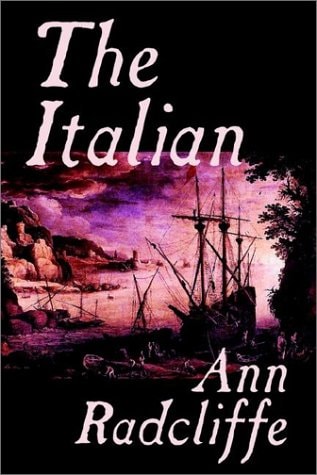
The Italian
0
0
As an Amazon Associate and affiliate partner, Menrva Books earns from qualifying purchases. Learn more
Author Description
This is Ann Radcliffe's most complete success in fiction, and a fine example of Gothic romance. In it, primarily through the character of its extraordinary hero, Schedoni, the book becomes more than just a thriller. The elements of tragedy are there and sustained so as to take it beyond the artifices of the Gothic.
Menrva's Summary
THE PULSE
The forbidden romance between Vincentio di Vivaldi and Ellena di Rosalba is thwarted by the sinister machinations of the monk Schedoni and the rigid social hierarchies of 18th-century Italy. Vincentio di Vivaldi, a young nobleman, seeks to marry the virtuous Ellena, but his mother and the mysterious monk Schedoni conspire to prevent the union through abduction and imprisonment. The narrative follows the couple as they navigate a landscape of crumbling monasteries, dark inquisitorial chambers, and treacherous mountain passes. Radcliffe employs a third-person omniscient perspective to heighten the sense of dread and suspense, balancing the external threats of the Inquisition against the internal moral conflicts of her characters. The story relies on atmospheric tension and the psychological weight of secrets to drive the plot toward its resolution.
INSIDE THE PAGES
- Atmospheric descriptions of Italian landscapes and architecture
- The presence of the sublime and the uncanny
- Complex psychological portrait of the antagonist Schedoni
- Use of suspense and delayed revelation
- Themes of religious corruption and institutional power
- Exploration of the tension between reason and superstition
- Melodramatic plot twists and high-stakes rescues
- Focus on the vulnerability of the heroine in isolated settings
THE COLLECTIVE ECHO
Readers and critics frequently identify this work as the pinnacle of Radcliffe's literary output, noting its superior structural cohesion compared to her earlier novels. Discussion often centers on the characterization of Schedoni, who is widely regarded as a precursor to the Byronic hero due to his complex motivations and moral ambiguity. Scholars highlight the effectiveness of Radcliffe's atmospheric writing, which prioritizes psychological dread over the visceral gore found in other Gothic works of the period. Many readers appreciate the balance between the romantic narrative and the darker, more philosophical questions regarding the nature of evil and institutional authority. The pacing is often described as deliberate, allowing for the slow accumulation of tension that defines the Gothic experience.
Page Count:
442
Publication Date:
1982-03-11
Publisher:
Oxford University Press
ISBN-10:
0192815725
ISBN-13:
9780192815729
Romance
Horror
Gothic
classic
18th century
Community Tags
Other Editions(43)
Naxos and Blackstone Publishing
2023
Default edition
West Margin Press
2022

Mint Editions
2022

Independently Published
2020

CreateSpace Independent Publishing Platform
2018

CreateSpace Independent Publishing Platform
2018

CreateSpace Independent Publishing Platform
2018

CreateSpace Independent Publishing Platform
2018

Black Curtain Press
2018

CreateSpace Independent Publishing Platform
2018

CreateSpace Independent Publishing Platform
2018

CreateSpace Independent Publishing Platform
2017

CreateSpace Independent Publishing Platform
2017
CreateSpace Independent Publishing Platform
2017

CreateSpace Independent Publishing Platform
2017

CreateSpace Independent Publishing Platform
2017

CreateSpace Independent Publishing Platform
2017

CreateSpace Independent Publishing Platform
2017

CreateSpace Independent Publishing Platform
2017
CreateSpace Independent Publishing Platform
2017

CreateSpace Independent Publishing Platform
2017

Oxford University Press
2017
CreateSpace Independent Publishing Platform
2017

CreateSpace Independent Publishing Platform
2017
OUP Oxford
2017

CreateSpace Independent Publishing Platform
2016

CreateSpace Independent Publishing Platform
2016

CreateSpace Independent Publishing Platform
2016

CreateSpace Independent Publishing Platform
2016

CreateSpace Independent Publishing Platform
2014

Wordsworth Editions Limited
2011

ReadHowYouWant.com, Limited
2010

ReadHowYouWant.com, Limited
2009

Digireads.com Publishing
2009
Digireads.com
2009

ReadHowYouWant
2008
Oxford University Press
2008

Oneworld Classics
2008
Ivan R. Dee Publisher
2002

Penguin
2001

Penguin UK
2000

ReadHowYouWant.com
2000
Oxford University Press
1982
Similar Books






Reader Comments
Share Your Thoughts
No comments yet. Be the first to share your thoughts!