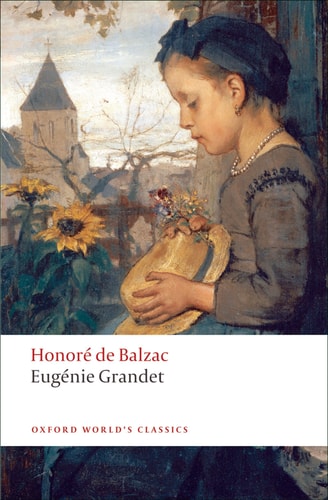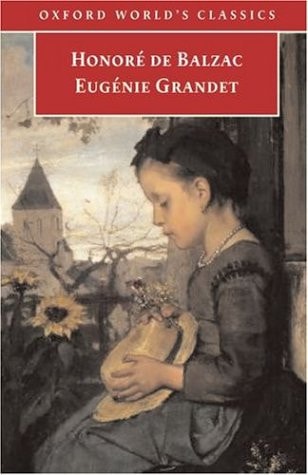
Eugénie Grandet
0
0
As an Amazon Associate and affiliate partner, Menrva Books earns from qualifying purchases. Learn more
Author Description
One of the earliest and most famous novels in Balzac's Comédie humaine, Eugénie Grandet portrays the fall of the Grandet household. In its record of financial acuity, the vicissitudes of the wine trade, and the social and economic consequences of the Revolution, we find a vigorous fictional document of the age.
Menrva's Summary
THE PULSE
The arrival of a cousin from Paris disrupts the suffocating, miserly existence of Eugénie Grandet, forcing her to confront the rigid control of her father. Eugénie lives in the provincial town of Saumur under the absolute authority of her father, a wealthy but pathologically frugal wine merchant. Her objective is to navigate the emotional and social constraints imposed by her father's obsession with wealth and status. The narrative, presented in a third-person omniscient perspective, examines the tension between personal desire and the crushing weight of familial duty. The world is defined by the rigid economic hierarchies of post-Revolutionary France, where every interaction is measured by its financial utility.
INSIDE THE PAGES
- Detailed examination of provincial social structures
- Focus on the psychological impact of extreme avarice
- Exploration of the transition from feudal to capitalist values
- Use of meticulous physical descriptions to mirror character traits
- Third-person omniscient narrative framework
- Portrayal of the wine trade as a central economic force
- Contrast between the innocence of the protagonist and the cynicism of the patriarch
- Integration of historical context regarding the French Revolution
THE COLLECTIVE ECHO
Readers and critics frequently highlight the precision with which Balzac dissects the mechanisms of greed and social mobility in nineteenth-century France. Discussion often centers on the stark contrast between Eugénie’s moral integrity and the cold, transactional nature of her father’s household. Many observers note the effectiveness of the atmospheric world-building, which renders the town of Saumur as a character in its own right. The pacing is often described as deliberate, allowing for a deep exploration of the thematic threads concerning inheritance and human value. This work remains a central point of study for those interested in the development of the realist novel.
Page Count:
240
Publication Date:
1991-01-10
Publisher:
Oxford University Press
ISBN-10:
0192826050
ISBN-13:
9780192826053
France fiction
classic
French literature
Social Commentary
Realism
Historical