
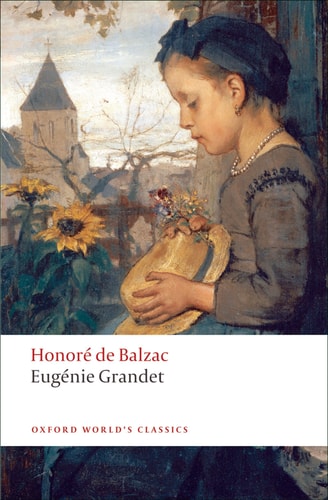
Eugénie Grandet
0
0
As an Amazon Associate and affiliate partner, Menrva Books earns from qualifying purchases. Learn more
Author Description
This is the question that fills the minds of the inhabitants of Saumur, the setting for Eugénie Grandet, one of the earliest and most famous novels in Balzac’s Comédie humaine. The Grandet household, oppressed by the exacting miserliness of Grandet himself, is jerked violently out of routine by the sudden arrival of Eugénie’s cousin Charles, recently orphaned and penniless. Eugénie’s emotional awakening, stimulated by her love for her cousin, brings her into direct conflict with her father, whose cunning and financial success are matched against her determination to rebel. Eugénie’s moving story is set against the backdrop of provincial oppression, the vicissitudes of the wine trade, and the workings of the financial system in the aftermath of the French Revolution. It is both a poignant portrayal of private life and a vigorous fictional document of its age.
Menrva's Summary
THE PULSE
The arrival of a penniless cousin disrupts the suffocating, miserly routine of the Grandet household, forcing a young woman to choose between filial obedience and her own burgeoning autonomy. Eugénie Grandet lives under the iron rule of her father, a man whose obsession with wealth dictates every aspect of their provincial existence. When her cousin Charles arrives, Eugénie experiences an emotional awakening that challenges the financial and social constraints imposed upon her. The narrative, presented in a third-person omniscient perspective, tracks the collision between Eugénie’s newfound desire for independence and her father’s calculated, ruthless control over the family’s future.
INSIDE THE PAGES
- Detailed examination of provincial social hierarchies in post-revolutionary France
- Meticulous character study of a pathological miser
- Exploration of the intersection between romantic idealism and financial pragmatism
- Use of the domestic sphere as a microcosm for broader economic systems
- Realistic depiction of the wine trade and local commerce
- Gradual shift in the protagonist from passive observer to assertive actor
- Contrast between the austerity of the Grandet home and the vanity of the outside world
- Critical commentary on the corrupting influence of inherited wealth
THE COLLECTIVE ECHO
Readers frequently highlight the precision with which Balzac captures the stifling atmosphere of provincial life. Discussion often centers on the stark contrast between Eugénie’s moral integrity and the predatory nature of her father’s financial dealings. Critics often point to the novel as a foundational text for the realist movement, noting its ability to ground personal drama within the specific economic realities of its time. The pacing is noted for its deliberate, observational quality, which allows the reader to fully grasp the weight of the social pressures acting upon the characters. Many find the exploration of greed and its impact on familial bonds to be a central, enduring theme that remains relevant to contemporary readers.
Page Count:
274
Publication Date:
1967-01-01
Publisher:
Oxford
ISBN-10:
0198323646
ISBN-13:
9780198323648
19th Century
Historical
French literature
Realism
classic
Social Commentary
Community Tags
Other Editions(7)




Similar Books













Reader Comments
Share Your Thoughts
No comments yet. Be the first to share your thoughts!