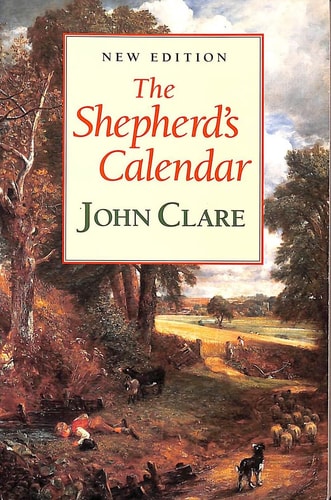
The Shepherd's Calendar
0
0
As an Amazon Associate and affiliate partner, Menrva Books earns from qualifying purchases. Learn more
Author Description
The poet, John Clare, who lived from 1793-1864, was the son of a Northamptonshire labourer and himself at various times a herd boy, militiaman, vagrant and unsuccessful farmer. He writes of the countryside and of village life with the special intensity of one who knows the land and its people intimately. "The Shepherd's Claendar", his most ambitious single poem, is both a classic of English poetry and a piece of social history, representing a statement about English country life from the point of view of its most silent representative - the agricultural labourer.To the modern reader "The Shepherd's Calendar" should be of interest because of the accuracy of its portrayal of natural life inthe different months of the year. It evokes natural life, using popular language, often derived from folk-songs and ballads.The book provides a sort of almanack of country life, detailing the tasks to be performed in each month of the year: ploughing in February, lambing in March, weeding in May, hay-making in June and so on. It also describes the flowers, the birds and the beasts to be found in hedgerow and field. It celebrates the festivals of the year - May Day games, shee-shearing feasts, Harvest Home and Christmas. As such, it will appeal to anyone who knows anything about nature in Britain or about farming life.This new edition of the text corrects numerous earlier misreadings as well as supplying substantial changes to "July" and "October". there is also a new introduction detailing the continuing importance of the poem to modern readers.
Menrva's Summary
THE PULSE
The poem documents the cyclical progression of the English countryside through the eyes of an agricultural laborer, capturing the intersection of human toil and the natural world. John Clare, writing from his perspective as a rural worker, details the seasonal rhythms of village life across twelve months. The narrative framework functions as an almanac, grounding the reader in the physical realities of farming, local customs, and the specific flora and fauna of the Northamptonshire landscape. The work serves as both a poetic observation of nature and a social record of the laboring class.
INSIDE THE PAGES
- Chronological structure organized by the twelve months of the year
- Detailed descriptions of seasonal agricultural tasks such as ploughing and hay-making
- Integration of folk-song and ballad-inspired language
- Observational focus on local bird species, flowers, and wildlife
- Documentation of traditional rural festivals like May Day and Harvest Home
- Representation of the agricultural laborer's viewpoint
- Linguistic accuracy based on corrected historical manuscripts
- Scholarly introduction providing context on the poem's enduring relevance
THE COLLECTIVE ECHO
Discussion often centers on the unique position of John Clare as a poet who lived the life he described, offering a perspective rarely found in the canon of 19th-century literature. Readers frequently highlight the precision of his nature writing, noting how the poem functions as a historical record of rural British life before the full impact of industrialization. Critics often point to the balance between the technical aspects of farming and the lyrical appreciation of the changing seasons. The work is widely regarded as a significant contribution to both environmental literature and social history, providing a window into a vanished way of life.
Page Count:
172
Publication Date:
1995-01-01
Publisher:
Oxford Univ Pr
ISBN-10:
0192831542
ISBN-13:
9780192831545
Nature
Poetry
Social History
English
English poetry
19th Century
English literature
Agriculture
Humor
Community Tags
Similar Books