
Silas Marner: The Weaver of Raveloe
0
0
As an Amazon Associate and affiliate partner, Menrva Books earns from qualifying purchases. Learn more
Author Description
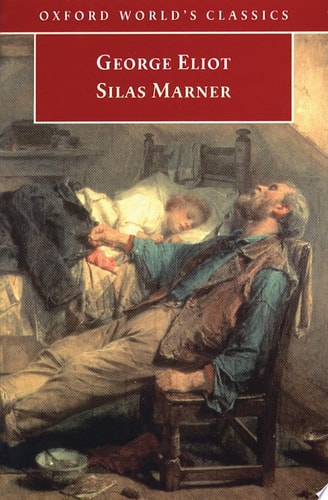
Falsely accused, cut off from his past, Silas the weaver is reduced to a spider-like existence, endlessly weaving his web and hoarding his gold. While the village celebrates Christmas and New Year, two apparently inexplicable events occur: Silas loses his gold and finds a child on his hearth. This new edition, which is based on the carefully corrected text George Eliot prepared a few months after the first edition, is accompanied by an Introduction which illuminates the intellectual context of what has often been presented as a nostalgic, sentimental tale.
Menrva's Summary
THE PULSE
A reclusive weaver, stripped of his only solace in gold, finds his solitary existence transformed by the sudden appearance of an abandoned child. Silas Marner, a man exiled from his former community by a false accusation of theft, lives a life of rigid isolation in the village of Raveloe. His existence is defined by the mechanical rhythm of his loom and the accumulation of coins, which serve as his only connection to the world. When his hoard is stolen, the loss forces him out of his self-imposed shell, coinciding with the arrival of a golden-haired toddler on his hearth. This narrative, presented in a third-person omniscient voice, examines the intersection of individual trauma and communal integration within a rural nineteenth-century setting.
INSIDE THE PAGES
- Exploration of the psychological impact of social alienation
- Contrast between industrial labor and agrarian village life
- Use of religious and secular symbolism to represent moral growth
- Examination of the role of chance versus providence in human affairs
- Detailed depiction of nineteenth-century English rural class structures
- Focus on the redemptive power of human connection
- Integration of moral philosophy into character development
- Linear narrative structure with a focus on character transformation
THE COLLECTIVE ECHO
Discussion often centers on the balance between the novel's sentimental elements and its underlying critique of Victorian social structures. Readers frequently highlight the precision of Eliot's prose, noting how she manages to make a potentially simple fable feel deeply grounded in psychological reality. Critics often point to the effective use of the weaver's isolation as a lens through which to view the broader themes of community and belonging. The work is widely regarded for its ability to weave complex moral questions into a narrative that remains accessible to a wide range of readers. Many discussions focus on how the character of Silas serves as a bridge between the harsh realities of his past and the potential for renewal in his new environment.
Page Count:
232
Publication Date:
1996-09-26
Publisher:
Oxford University Press
ISBN-10:
0192832107
ISBN-13:
9780192832108
Fiction
Victorian
Social Realism
Historical
England
classic
Fathers and daughters
Community Tags
Other Editions(11)



Similar Books



Reader Comments
Share Your Thoughts
No comments yet. Be the first to share your thoughts!