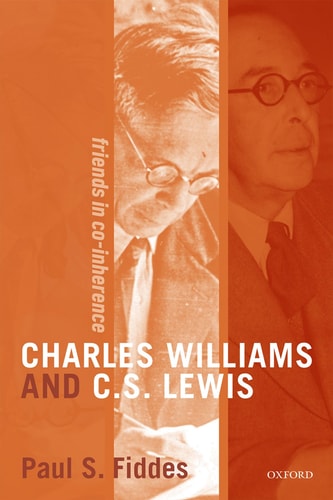
Charles Williams and C. S. Lewis: Friends in Co-inherence
0
0
As an Amazon Associate and affiliate partner, Menrva Books earns from qualifying purchases. Learn more
Author Description
This study of the literary relationship between Charles Williams and C. S. Lewis during the years 1936-1945 focuses on the theme of 'co-inherence' at the centre of their friendship. The idea of 'co-inherence' has long been recognized as an important contribution of Williams to theology, and had significant influence on the thought of Lewis. This account of the two writers' conviction that human persons 'inhere' or 'dwell' both in each other and in the triune God reveals many inter-relationships between their writings that would otherwise be missed. It also shows up profound differences between their world-views, and a gradual, though incomplete, convergence onto common ground. Exploring the idea of co-inherence throws light on the fictional worlds they created, as well as on their treatment (whether together or separately) of a wide range of theological and literary subjects: the Arthurian tradition, the poetry of William Blake and Thomas Traherne, the theology of Karl Barth, the nature of human and divine love, and the doctrine of the Trinity. This study draws for the first time on transcriptions of Williams' lectures from 1932 to 1939, tracing more clearly the development and use of the idea of co-inherence in his thought than has been possible before. Finally, an account of the use of the word 'co-inherence' in English-speaking theology suggests that the differences that existed between Lewis and Williams, especially on the place of analogy and participation in human experience of God, might be resolved by a theology of co-inherence in the Trinity.
Menrva's Summary
THE THESIS
This study investigates the intellectual and theological relationship between Charles Williams and C. S. Lewis, specifically focusing on the concept of 'co-inherence' as a central pillar of their friendship and shared creative output. Paul S. Fiddes, a scholar of theology and literature, utilizes previously unpublished lecture transcripts from Williams to map the development of this doctrine. He argues that while the two writers maintained distinct worldviews, their mutual engagement with the idea of humans dwelling within one another and the triune God created a significant, if incomplete, convergence in their respective bodies of work.
THE SCOPE MAP
What You Will Find
- Analysis of the literary and theological influence of Charles Williams on C. S. Lewis between 1936 and 1945.
- Examination of the Arthurian tradition, the poetry of William Blake and Thomas Traherne, and the theology of Karl Barth.
- Integration of primary source material, specifically transcriptions of Williams' lectures from 1932 to 1939.
- A theological evaluation of the doctrine of the Trinity and the nature of human and divine love.
Scope Limits
- The study is strictly confined to the period of 1936-1945 and does not provide a comprehensive biography of either author.
- It does not attempt to resolve all theological debates between the two, focusing primarily on the specific lens of co-inherence.
THE AUTHORITY PERSPECTIVE
Scholars and theologians identify this work as a significant contribution to the study of the Inklings, particularly for its use of previously unavailable lecture materials. Readers frequently note the academic density of the prose, which is intended for those with a background in systematic theology or literary history.
Page Count:
432
Publication Date:
2022-01-28
Publisher:
Oxford University Press
ISBN-10:
0192845462
ISBN-13:
9780192845467
Biography
History of Ideas
Literary Criticism
Theology
English literature
Community Tags
Similar Books