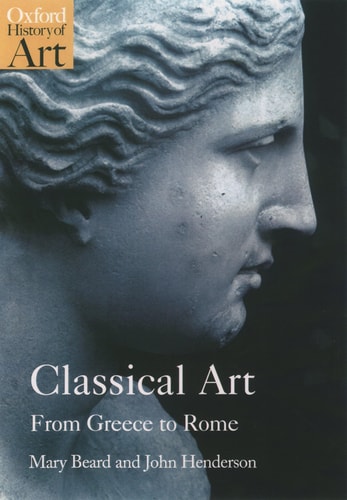
Classical Art: From Greece to Rome
0
0
As an Amazon Associate and affiliate partner, Menrva Books earns from qualifying purchases. Learn more
Author Description
The stunning masterpieces of Ancient Greece and Rome are fundamental to the story of art in Western culture and to the origins of art history. The expanding Greek world of Alexander the Great had an enormous impact on the Mediterranean superpower of Rome. Generals, rulers, and artists seized, imitated, and re-thought the stunning legacy of Greek painting and sculpture, culminating in the greatest art-collector the world had ever seen: the Roman emperor Hadrian.This exciting new look at Classical art starts with the excavation of the buried city of Pompeii, and investigates the grandiose monuments of ancient tyrants, and the sensual beauty of Apollo and Venus. Concluding with that most influential invention of all, the human portrait, it highlights the re-discovery of Classical art in the modern world, from the treasure hunts of Renaissance Rome to scientific retrieval of artworks in the twenty-first century.
Menrva's Summary
THE THESIS
This book investigates the complex relationship between the artistic legacies of Ancient Greece and Rome and their enduring influence on Western cultural history. Authors Mary Beard and John Henderson, both distinguished scholars in the field of classics, utilize a combination of archaeological evidence and historical analysis to challenge traditional narratives of art history. They argue that the transition from Greek to Roman art was not merely a process of imitation, but a dynamic exchange shaped by political power, conquest, and the evolving concept of the human portrait.
THE SCOPE MAP
What You Will Find
- Analysis of the artistic impact of Alexander the Great on the Roman Mediterranean.
- Examination of the role of Roman emperors, specifically Hadrian, as art collectors and patrons.
- Investigation of the excavation and cultural significance of Pompeii.
- Discussion of the evolution of the human portrait in antiquity.
Scope Limits
- The text does not provide an exhaustive catalog of every extant Greek or Roman artifact.
- It does not focus on the technical chemical composition of materials used in ancient sculpture or painting.
THE AUTHORITY PERSPECTIVE
Experts and academics frequently cite this work for its accessible yet rigorous approach to the complexities of the Classical period. Readers often note that the prose balances scholarly depth with a narrative style that makes the history of art approachable for both students and general enthusiasts.
Page Count:
304
Publication Date:
2001-07-19
Publisher:
Oxford University Press
ISBN-10:
0192842374
ISBN-13:
9780192842374
Art History
Ancient History
Archaeology
Western Art
Community Tags
Similar Books