The Tiny and the Fragmented
0
0
As an Amazon Associate and affiliate partner, Menrva Books earns from qualifying purchases. Learn more
Author Description
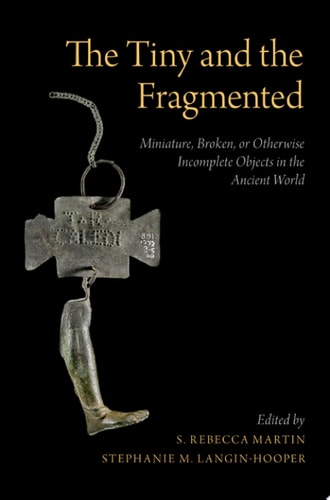
Miniature and fragmentary objects are both eye-catching and yet easily dismissed. Tiny scale entices users with visions of Lilliputian worlds. The ambiguity of fragments intrigues us, offering tactile reminders of reality's transience. Yet, the standard scholarly approach to such objects has been to see them as secondary, incomplete things, whose principal purpose was to refer to a complete and often life-size whole. The Tiny and the Fragmented offers a series of fresh perspectives on the familiar concepts of the tiny and the fragmented. Written by a prestigious group of internationally-acclaimed scholars, the volume presents a remarkable diversity of case studies that range from Neolithic Europe to Pre-Colombian Honduras to the Classical Mediterranean and Ancient Near East. Each scholar takes a different approach to issues of miniaturization and fragmentation but is united in considering the little and broken things of the past as objects in their own right. Whether a life-size or whole thing is made in a scaled-down form, deliberately broken as part of its use, or only considered successful in the eyes of ancient users if it shows some signs of wear, it challenges our expectations of representation and wholeness, of what it means for a work of art to be finished and affective. Overall, The Tiny and the Fragmented demands a reconsideration of the social and contextual nature of miniaturization, fragmentation, and incompleteness, making the case that it was because of, rather than in spite of, their small or partial state that these objects were valued parts of the personal and social worlds they inhabited.
Menrva's Summary
THE THESIS
This volume investigates the cultural significance of miniature and fragmentary objects in ancient societies, challenging the traditional scholarly view that such items are merely incomplete representations of larger, whole objects. The editors, S. Rebecca Martin and Stephanie M. Langin-Hooper, curate a collection of essays from international scholars who argue that smallness and fragmentation were intentional qualities that imbued these objects with specific social and functional value. By shifting the focus from the 'missing' whole to the object as it exists, the authors provide a framework for understanding how ancient users interacted with and derived meaning from these partial or scaled-down forms.
THE SCOPE MAP
What You Will Find
- Analysis of miniaturization and fragmentation across Neolithic Europe, Pre-Columbian Honduras, and the Ancient Near East.
- Theoretical frameworks for interpreting object agency and the aesthetics of incompleteness.
- Comparative studies on the social utility of broken or worn artifacts.
Scope Limits
- The text does not provide a comprehensive global survey of all ancient cultures.
- It focuses primarily on archaeological and art historical interpretations rather than modern psychological theories of scale.
THE AUTHORITY PERSPECTIVE
Scholars and archaeologists view this collection as a significant intervention in material culture studies, particularly for its focus on the intentionality of non-whole objects. Readers frequently note the academic density of the prose, which serves as a specialized resource for students and professionals in the fields of classical and ancient studies.
Page Count:
304
Publication Date:
2018-01-01
Publisher:
Oxford University Press
ISBN-10:
019061482X
ISBN-13:
9780190614829
Art History
Ancient History
Anthropology
Archaeology
Community Tags
Similar Books