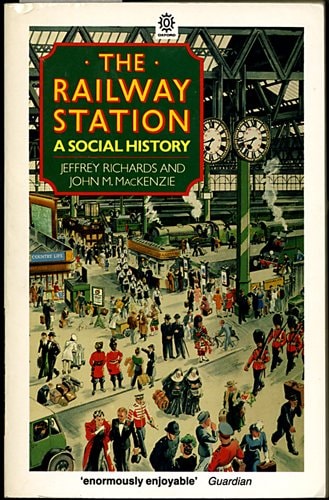
The Railway Station: A Social History
0
0
As an Amazon Associate and affiliate partner, Menrva Books earns from qualifying purchases. Learn more
Author Description
For the Victorians, the advent of the railways symbolized a new age of progress, power, and civilization. Since then, industrialization has often proved a mixed blessing; yet we continue to acknowledge the importance--as well as the romantic mystique--of the rails and all that comes with them. This engaging book examines the role of the railway station around the world, revealing a microcosm more complex and fascinating than anything our nineteenth-century forebears could have dreamed of. The authors chart the changing styles in the construction and decoration of the station, from the somber grandeur of St. Pancras in London to the humbler delights of country stations in the American Midwest. As the book shows, the various facilities offered by the station have assumed as much importance as the building itself: the ticket office and the waiting room have become as familiar as the trains. The book also discusses how, in paintings and poetry, stations have been depicted as places of tearful departure or joyful reunion, and how, in films like Brief Encounter, they have assumed the status of a starring role. Stations also have had a part to play in politics and the economy, especially in wartime, and governments throughout the world have long recognized their strategic significance. This enthralling volume captures the allure of the station by encompassing the disciplines of history, literature, art, and architecture in a sweeping global survey, unique in both scope and perspective.
Menrva's Summary
THE THESIS
This work investigates the railway station as a critical social, architectural, and cultural nexus that reflects the broader evolution of industrial society. Authors Jeffrey Richards and John M. MacKenzie, both established historians, utilize a multidisciplinary framework to analyze how these structures transitioned from symbols of Victorian progress to complex sites of economic, political, and emotional significance. By synthesizing architectural history with cultural analysis, the authors argue that the station functions as a microcosm of the modern world.
THE SCOPE MAP
What You Will Find
- Global survey of railway station architecture and design evolution
- Analysis of the station as a recurring motif in literature, painting, and cinema
- Examination of the strategic role of stations in wartime and national economies
- Comparative study of diverse station types, from grand urban terminals to rural depots
Scope Limits
- Does not provide a technical engineering manual for railway construction
- Does not focus exclusively on the mechanical history of locomotives
THE AUTHORITY PERSPECTIVE
Experts recognize this volume as a comprehensive interdisciplinary study that successfully bridges the gap between architectural history and social commentary. Readers frequently note the accessibility of the prose despite the academic depth of the research presented.
Page Count:
464
Publication Date:
1988-01-01
Publisher:
Oxford Univ Pr
ISBN-10:
0192852019
ISBN-13:
9780192852014
History
Architecture
Transportation
Social History
Educational Resources
Americas
Community Tags
Similar Books