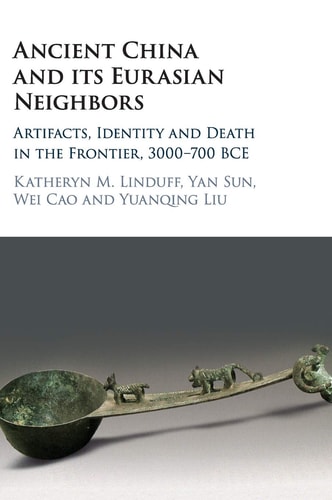
Ancient China and its Eurasian Neighbors: Artifacts, Identity and Death on the Frontier, 3000–700 BCE
0
0
As an Amazon Associate and affiliate partner, Menrva Books earns from qualifying purchases. Learn more
Author Description
This volume examines the role of objects in the region north of early dynastic state centers, at the intersection of Ancient China and Eurasia, a large area that stretches from Xinjiang to the China Sea, from c.3000 BCE to the mid-eighth century BCE. This area was a frontier, an ambiguous space that lay at the margins of direct political control by the metropolitan states, where local and colonial ideas and practices were reconstructed transculturally. These identities were often merged and displayed in material culture. Types of objects, styles, and iconography were often hybrids or new to the region, as were the tomb assemblages in which they were deposited and found. Patrons commissioned objects that marked a symbolic vision of place and person and that could mobilize support, legitimize rule, and bind people together. Through close examination of key artifacts, this book untangles the considerable changes in political structure and cultural makeup of ancient Chinese states and their northern neighbors.
Menrva's Summary
THE THESIS
This volume investigates the role of objects in the frontier region north of early dynastic Chinese state centers, spanning from 3000 to 700 BCE. The book examines this area as an ambiguous space where local and colonial ideas and practices were reconstructed transculturally, leading to hybrid material culture and tomb assemblages. The authors explore how patrons commissioned objects to symbolize place and person, mobilize support, legitimize rule, and foster unity among diverse populations. Through close analysis of key artifacts, the study untangles significant shifts in the political structures and cultural makeup of ancient Chinese states and their northern neighbors.
THE SCOPE MAP
- Examination of material culture from the region north of early dynastic Chinese state centers (c. 3000–700 BCE).
- Analysis of objects, styles, and iconography that represent transcultural reconstruction and hybridity.
- Study of tomb assemblages as indicators of identity and cultural practices.
- Exploration of the commissioning of objects for symbolic, political, and social purposes.
- Close examination of key artifacts to understand changes in ancient Chinese states and their neighbors.
- Focus on the frontier as a space of political ambiguity and cultural negotiation.
THE AUTHORITY PERSPECTIVE
The book is an academic study focusing on the material culture and identity formation in the frontier regions between ancient China and Eurasia. It offers a detailed analysis of artifacts and tomb assemblages to understand the complex interactions and cultural exchanges that occurred during the period from 3000 to 700 BCE. The scholarly approach suggests a text aimed at specialists in archaeology, ancient history, and Eurasian studies. The detailed examination of objects and their symbolic significance provides insights into the political and social dynamics of the time.
Page Count:
278
Publication Date:
2018-01-01
Publisher:
Cambridge University Press
ISBN-10:
1108418619
ISBN-13:
9781108418614
Non-Fiction
History
Archaeology
Ancient History
Community Tags
Similar Books