Author Description
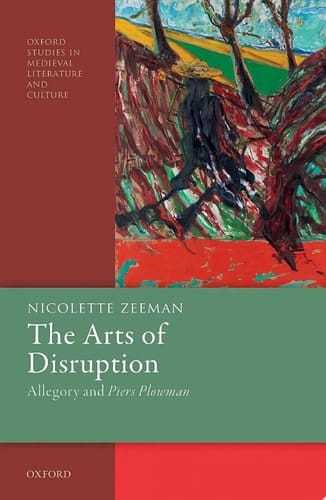
William Langland's Piers Plowman was written and read during a “golden age” of English preaching. The poem describes a world where sermons took many different forms and were delivered in many different contexts, from public events in the life of the realm to pastoral instruction in the parish. It dramatises preaching as part of its allegorical action, showing how sermons shaped their listeners' understanding of the world; it also includes polemical critique of corrupt, self-interested preaching, and offers radical prescriptions for its reform. This book argues that Langland's central insight into the way that sermons moved and engaged their audiences had to do with their characteristic use of narrative. Preachers in the poem address listeners who are absorbed in the concerns of their present moment, and encourage them to new forms of social and spiritual endeavour by locating that moment in a larger, interpreted plot: the story of an individual life, or an emergent community, or of salvation history as a whole. The book employs a critical vocabulary derived from Paul Ricoeur to describe the process by which these narratives are composed, and to show how they mediate and reconfigure their listeners' experiences.
Menrva's Summary
THE THESIS
This book investigates how William Langland utilizes the mechanics of preaching and narrative structure to influence the social and spiritual engagement of his audience in Piers Plowman. Alastair Bennett, a scholar of medieval literature, examines the intersection of 14th-century homiletic traditions and Langland’s allegorical verse. By applying the hermeneutic framework of Paul Ricoeur, the author argues that Langland’s poem functions as a sophisticated critique and reformist tool that reconfigures the reader's perception of salvation history and communal identity.
THE SCOPE MAP
What You Will Find
- Analysis of 14th-century English preaching contexts and pastoral instruction.
- Application of Paul Ricoeur’s narrative theory to medieval allegorical poetry.
- Examination of the polemical critique of corrupt preaching within the poem.
- Exploration of how sermons integrate individual life stories into broader salvation history.
Scope Limits
- The study focuses primarily on the narrative and homiletic aspects of Piers Plowman rather than a comprehensive biographical account of William Langland.
- The analysis does not provide an exhaustive history of all medieval sermon genres outside of their direct relevance to the poem.
THE AUTHORITY PERSPECTIVE
Scholars in the field of medieval studies recognize this work as a significant contribution to understanding the intersection of theology and literary form in Langland’s writing. Readers frequently note the academic density of the prose and the precision with which Bennett applies modern narrative theory to historical texts.
Page Count:
288
Publication Date:
2024-01-01
Publisher:
Oxford University Press
ISBN-10:
0192886266
ISBN-13:
9780192886262
Poetry Analysis
English literature
Literary Criticism
Poetry
Theology
Community Tags
Similar Books