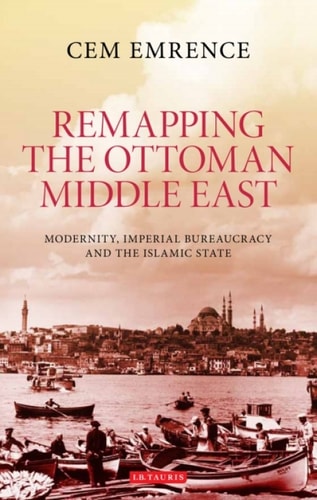
Remapping the Ottoman Middle East
0
0
As an Amazon Associate and affiliate partner, Menrva Books earns from qualifying purchases. Learn more
Author Description
As a result of the formation of the modern Turkish state, nationalist narratives of the Ottoman Empire's collapse are commonplace. Remapping the Ottoman Middle East, on the other hand, examines alternative and disparate routes to modernity during the nineteenth century. Pursuing a comparison of different regions of the empire, this book demonstrates that the Ottoman imperial universe was shaped by three distinct and simultaneous narratives: market relations in its coastal areas; imperial bureaucracy in the cities of central Anatolia, Syria and Palestine; and Islamic trust networks in the frontier regions of the Arabian Peninsula. In weaving together these localized developments, Cem Emrence departs from narratives of state centralism and suggests that a comprehensive way of understanding the late Ottoman world and its legacy should start from exploring regionally-constituted and network-based historical trajectories. Introducing a persuasive new model for understanding the late Ottoman world, this book will be essential reading for historians of the Ottoman Empire.
Menrva's Summary
THE THESIS
This book challenges nationalist narratives of the Ottoman Empire's collapse by exploring alternative routes to modernity in the nineteenth century. Cem Emrence's work posits that the Ottoman imperial universe was shaped by three distinct, simultaneous narratives: market relations in coastal areas, imperial bureaucracy in central Anatolian cities and the Levant, and Islamic trust networks in the Arabian Peninsula's frontier regions. By comparing these diverse regional developments, the book argues against state-centric models. It proposes that a comprehensive understanding of the late Ottoman world and its legacy must begin with an exploration of regionally constituted and network-based historical trajectories.
THE SCOPE MAP
- Analysis of market relations in the Ottoman Empire's coastal regions.
- Examination of imperial bureaucracy in cities of central Anatolia, Syria, and Palestine.
- Investigation of Islamic trust networks in the frontier regions of the Arabian Peninsula.
- Comparative study of three distinct and simultaneous narratives shaping the Ottoman imperial universe.
- Argument against state-centralism in understanding the late Ottoman world.
- Introduction of a new model for understanding the late Ottoman world based on regionally-constituted and network-based historical trajectories.
THE AUTHORITY PERSPECTIVE
The book is positioned as essential reading for historians of the Ottoman Empire, offering a persuasive new model for understanding the late Ottoman world. Its approach departs from traditional narratives of state centralism, instead emphasizing regionally-constituted and network-based historical trajectories. The work is likely to appeal to scholars interested in comparative imperial history, economic history, and the social and political structures of the Middle East during the nineteenth century. It aims to provide a more nuanced understanding of modernity's diverse manifestations within the empire.
Page Count:
208
Publication Date:
2015-12-18
Publisher:
Bloomsbury UK
ISBN-10:
0857720996
ISBN-13:
9780857720993
Non-Fiction
History
Ottoman Empire
Social History
Economic History
Modernity
Community Tags
Similar Books