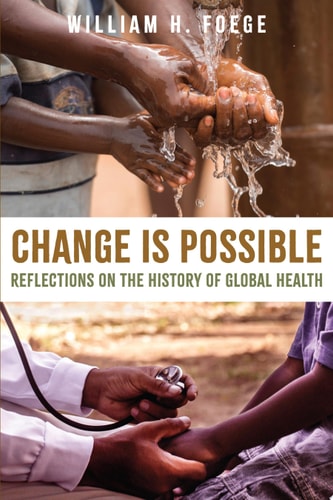
Change Is Possible
0
0
As an Amazon Associate and affiliate partner, Menrva Books earns from qualifying purchases. Learn more
Author Description
A groundbreaking new history of global health from one of the greatest leaders in the field. In Change Is Possible, public health legend William H. Foege and five coauthors chronicle the failures and successes of global health through the modern age, including the massive impacts of colonialism, religious groups, philanthropies, politics, NGOs, and more. Foege, who has served in local, national, and international public health contexts—including as the director of the Centers for Disease Control and Prevention—is uniquely qualified to reflect on the history of global health. He and his Rollins School of Public Health coauthors explain why colonialism has been the greatest disaster for global health, whereas military medicine may have been its greatest asset. From the rapid development of NGOs to the impact of pharmaceutical companies over the last 35 years to the hybrid programs that are now responsible for innovative contributions, the authors discuss multiple impacts on global health. In chapters with coauthors Paul Elish, Alison T. Hoover, Madison Gabriella Lee, Deborah Chen Tseng, and Kiera Chan, Foege explores additional essential topics such as the legacy of colonialism in global health, early philanthropy versus new philanthropy, and how to promote positive change. Foege also shares critical lessons from the smallpox campaign—a disease he helped eradicate—and how these historical lessons can be applied in global health work today. The book's research and reflections make this an essential book for students and readers interested in global health. In a narrative that is both deeply personal and universal, Foege shares lessons learned and personal experiences that craft a strikingly new history of global health.
Menrva's Summary
THE THESIS
This book examines the complex history of global health, analyzing its triumphs and failures through the lens of modern history and influential forces. The work, authored by public health leader William H. Foege and five coauthors, delves into the profound impacts of colonialism, religious organizations, philanthropic endeavors, political landscapes, and non-governmental organizations on global health outcomes. Foege, with his extensive experience including leading the CDC, offers a unique perspective on how these elements have shaped health initiatives worldwide, contrasting the detrimental effects of colonialism with the potential benefits derived from military medicine.
THE SCOPE MAP
- A historical analysis of global health, tracing its evolution through the modern age.
- An examination of the significant impacts of colonialism on global health.
- An exploration of the roles played by religious groups, philanthropies, and political entities.
- An assessment of the influence of NGOs and pharmaceutical companies.
- Case studies and lessons learned from the smallpox eradication campaign.
- Reflections on promoting positive change in global health initiatives.
- Personal experiences and lessons from a leader in the field.
THE AUTHORITY PERSPECTIVE
The book is presented as a significant historical account of global health, drawing on the extensive experience of William H. Foege and his coauthors. The description highlights its comprehensive scope, covering the multifaceted influences that have shaped public health worldwide. It is positioned as an essential resource for students and readers interested in the field, offering both a broad historical overview and personal insights from a key figure in global health history. The narrative aims to provide a new understanding of global health's past and its implications for the future.
Page Count:
336
Publication Date:
2024-11-19
Publisher:
Johns Hopkins University Press
ISBN-10:
1421450437
ISBN-13:
9781421450438
History
Non-Fiction
Politics
Philanthropy
Public Health
Colonialism
Global Health
Medicine
Community Tags
Similar Books





Reader Comments
Share Your Thoughts
No comments yet. Be the first to share your thoughts!