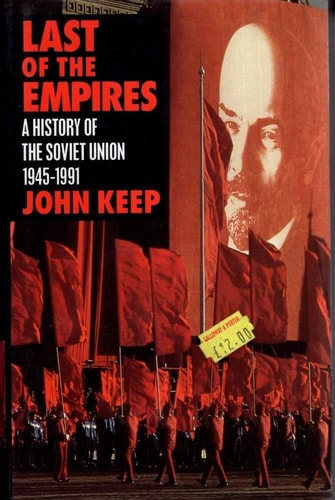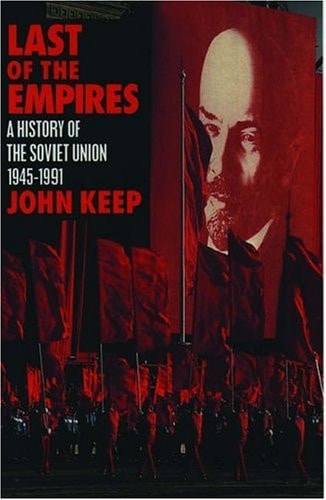
Last of the Empires: A History of the Soviet Union, 1945-1991
0
0
As an Amazon Associate and affiliate partner, Menrva Books earns from qualifying purchases. Learn more
Author Description
Designed with the general reader in mind, this clearly written narrative history of the Soviet Union from the end of World War II to its collapse in 1991 provides an integrated introduction to the "Last of the Empires." Keep deals with those of the more than one hundred nationalities in the USSR that held union-republic status, especially the Baltic and Central Asian peoples, emphasizing the key problem of inter-ethnic relations and central themes of political, economic, social, and cultural development.The story begins with the last years of Stalin's despotic rule, which Keep treats as the introduction to the comparatively optimistic era of Khrushchev. Under his leadership Communist rule was reformed, though not necessarily liberalized, and there was an overall relaxation of police terror and an improvement in living standards. Keep shows how the ensuing Brezhnev years brought greater material prosperity but marked a setback to popular aspirations for change in other respects. Yet it was in these years that official ideology became less relevant than ever to people's everyday concerns; Keep argues that the Party lost moral authority due to internal corruption, and that the system gradually eroded. The fate of the reform policies of the younger and more pragmatic leadership symbolized by Gorbachev is the subject of the book's final chapters, which delineate how central institutions crumbled as national minorities claimed their rights and centrifugal pressures brought about the empire's collapse. Making use of a broad literature of "sovietological" expertise along with the new information made available since Soviet secrecy was relaxed in 1988, Last of the Empires sums up what is now known about postwar Soviet history and presents it in a clear and coherent narrative.
Menrva's Summary
THE THESIS
What factors and internal pressures led to the disintegration of the Soviet Union between 1945 and 1991? John L. H. Keep, a scholar of Soviet history, synthesizes decades of academic research and newly accessible archival data to examine the structural decline of the USSR. He argues that the erosion of the Communist Party's moral authority, combined with persistent inter-ethnic tensions and economic stagnation, rendered the state unable to sustain its imperial structure against the reformist pressures of the late twentieth century.
THE SCOPE MAP
What You Will Find
- A chronological analysis of Soviet leadership from Stalin to Gorbachev.
- Examination of inter-ethnic relations among the union-republics, specifically Baltic and Central Asian populations.
- Assessment of the transition from the Khrushchev era reforms to the stagnation of the Brezhnev period.
Scope Limits
- The text focuses primarily on the political and structural collapse of the state rather than a comprehensive military history of the Cold War.
- It does not provide an exhaustive biography of individual leaders, prioritizing systemic analysis over personal narrative.
THE AUTHORITY PERSPECTIVE
Experts recognize this work as a balanced and accessible synthesis of postwar Soviet history suitable for both students and general readers. Scholars frequently note that Keep’s integration of ethnic dynamics provides a necessary perspective that distinguishes this text from more centralized political histories.
Page Count:
496
Publication Date:
1997-05-29
Publisher:
Oxford University Press
ISBN-10:
0192892371
ISBN-13:
9780192892379
History
Russian History
Soviet Union
20th Century
European History