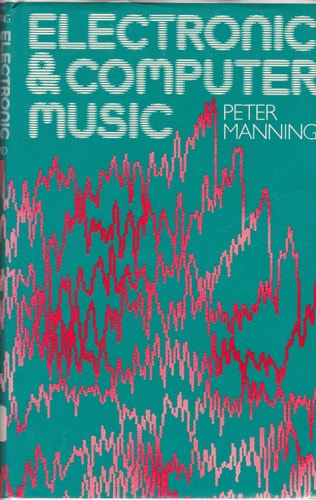
Electronic and Computer Music
0
0
As an Amazon Associate and affiliate partner, Menrva Books earns from qualifying purchases. Learn more
Author Description
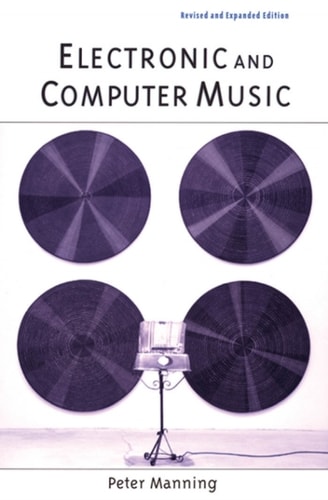
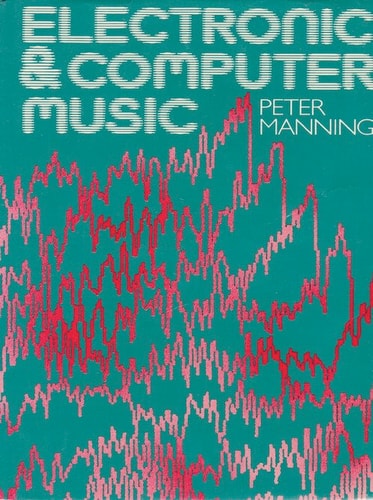
This is a revised and expanded edition of Peter Manning's classic introduction to electronic and computer music, dealing with the development of electronic and computer music from its birth to the present day. After an introductory chapter concerned with the antecedents of electronic music from the turn of the century to the Second World War, the book continues with the birth and development of the early 'classical' studios of the 1950s, examined both in terms of their design philosophy and also their compositional output. A chapter devoted to the characteristics of voltage control technology leads to a study of the subsequent upsurge of creative activity, considered under three headings: tape works, live electronic music, and the early use of electronics in rock and pop music. Attention is then turned to the sphere of computer music and its evolution from the early experiments with large commercial computers to the advanced music workstations of today. This section has been significantly expanded from the first edition to take account of the rapid development of this technology since the early 1980s, in particular the introduction of MIDI and the increasing use of the personal computer as a musical tool. A bibliography and an extensive discography are included. The primary objective throughout is to provide the reader with a critical perspective of the medium both in terms of its musical output and the philosophical and technical features which have shaped its growth.
Menrva's Summary
THE THESIS
This text investigates the historical development, technical evolution, and compositional significance of electronic and computer music from its early twentieth-century origins to the contemporary digital era. Peter Manning, a recognized scholar in the field, utilizes a chronological and thematic framework to analyze how technological advancements have influenced musical output. The book synthesizes technical history with critical musicological analysis to provide a comprehensive overview of the medium's growth.
THE SCOPE MAP
What You Will Find
- Historical analysis of early electronic music studios from the 1950s
- Technical explanations of voltage control and MIDI technology
- Evolution of computer music from mainframe experiments to personal workstations
- Discussion of tape works and live electronic performance
- Integration of electronics into rock and pop music
Scope Limits
- Does not provide practical tutorials or instructional guides for music production
- Focuses primarily on the history and development rather than contemporary software engineering
THE AUTHORITY PERSPECTIVE
Experts and academics frequently cite this work as a foundational text for understanding the historical trajectory of electronic music. Readers often note the academic density of the prose, which serves as a comprehensive reference for students and researchers in musicology.
Page Count:
291
Publication Date:
1985-01-01
Publisher:
Oxford University Press
ISBN-10:
0193119188
ISBN-13:
9780193119185
Music
history music
Musicology
Humanities
Music Technology
Computer Music
Criticism history
Community Tags
Other Editions(8)


Similar Books










Reader Comments
Share Your Thoughts
No comments yet. Be the first to share your thoughts!