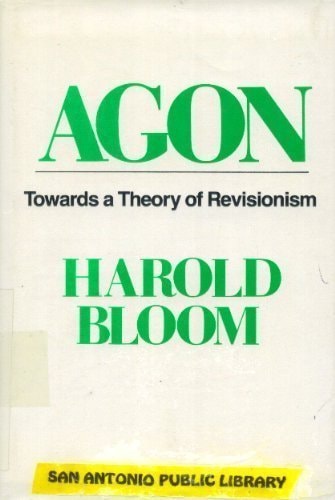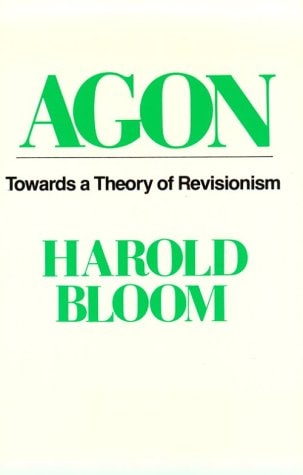
Agon: Towards a Theory of Revisionism
0
0
As an Amazon Associate and affiliate partner, Menrva Books earns from qualifying purchases. Learn more
Author Description
In the culmination of a series that began with The Anxiety of Influence and A Map or Misreading, Harold Bloom expands upon his controversial theory of revisionism, which he views as a contest of opposing artistic and moral drives. From this theoretical perspective, Bloom reexamines Freud, religious sources of literature, literary modes such as fantasy, and the sequence of American writers that includes Ralph Waldo Emerson, Walt Whitman, Wallace Stevens, Hart Crane, and John Ashbery.
Menrva's Summary
THE THESIS
Harold Bloom investigates the nature of literary revisionism as a fundamental agonistic struggle between the creative drive of the poet and the overwhelming influence of their predecessors. Bloom, a prominent literary critic, utilizes his established framework of the 'anxiety of influence' to argue that artistic creation is a contest of opposing moral and aesthetic forces. By synthesizing psychoanalytic theory with a deep reading of canonical texts, he posits that revisionism is the primary mechanism through which writers assert their own identity against the weight of tradition.
THE SCOPE MAP
What You Will Find
- A comprehensive theoretical framework defining revisionism as an agonistic process
- Psychoanalytic readings of Sigmund Freud and his impact on literary interpretation
- Critical analysis of religious texts as foundational sources for literary modes
- Comparative studies of American poets including Emerson, Whitman, Stevens, Crane, and Ashbery
THE AUTHORITY PERSPECTIVE
Critics and scholars frequently identify this work as a dense, challenging expansion of Bloom's earlier theories on poetic influence. It is widely regarded as a foundational text for those studying the mechanics of literary history and the psychological underpinnings of the creative process.
Page Count:
352
Publication Date:
1983-09-08
Publisher:
Oxford University Press
ISBN-10:
019503354X
ISBN-13:
9780195033540
Philosophy
Non-Fiction
English literature
Literary theory
Literary Criticism