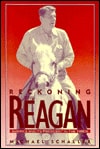
Reckoning with Reagan: America and Its President in the 1980s
0
0
As an Amazon Associate and affiliate partner, Menrva Books earns from qualifying purchases. Learn more
Author Description
At the height of Ronald Reagan's popularity in July 1986, Time Magazine wrote glowingly of how he had "found America's sweet spot." Reagan seemed a "magician who carries a bright, ideal America like a holograph in his mind and projects its image in the air." Not since journalist Theodore White rhapsodized about "Camelot" in the wake of John F. Kennedy's assassination had a president been spoken of so reverently. And indeed, Reagan seemed to know just what America wanted to hear. In the 1980 campaign, energized by Jimmy Carter's problems, the Republican nominee downplayed his own conservative economic and social ideas to call for a restoration of national strength and pride. "This is the greatest country in the world," he declared, "we have the talent, we have the drive, we have the imagination. Now all we need is the leadership." Government, he said time and again "is not the solution to our problem, government is the problem." Reagan pledged to bring Americans a "little good news" and during the next eight years, through recession and recovery, cold war and detente, success and scandal, he forged a powerful bond with the public. His popularity appeared so unrelated to actual achievements and so undiminished by failure that Colorado Representative Pat Schroeder dubbed him the "teflon president."While much has written about the Reagan presidency by "insiders" and journalists, Reckoning with Reagan is the first historian's account of the period, providing a brief but comprehensive and non-polemical overview of what exactly took place while Reagan was in charge. Schaller, the acclaimed author of Douglas MacArthur, The American Occupation of Japan, and The United States and China in the Twentieth Century, presents a lively account of the Reagan years, analyzing the origins and consequences of the Reagan administration's domestic and foreign policies, and weighing the former president's great personal and political popularity against the effects of his economic, social,
Menrva's Summary
THE THESIS
This work investigates the disconnect between Ronald Reagan's immense personal popularity and the actual outcomes of his domestic and foreign policy initiatives during the 1980s. Michael Schaller, a distinguished historian of American foreign policy, utilizes a scholarly framework to move beyond the partisan rhetoric that often defines the Reagan era. By examining the administration's actions through a historical lens, the text provides a balanced assessment of how Reagan's political persona functioned alongside the economic and social realities of his presidency.
THE SCOPE MAP
What You Will Find
- A comprehensive historical analysis of the 1980s political landscape in the United States.
- An examination of the origins and long-term consequences of Reagan-era economic and social policies.
- A critical review of the administration's foreign policy, including Cold War dynamics and detente.
- An assessment of the 'Teflon' political phenomenon and its impact on public perception versus administrative performance.
THE AUTHORITY PERSPECTIVE
Experts and historians recognize this work as a foundational, non-polemical account that successfully bridges the gap between journalistic observation and academic history. Readers frequently note the clarity of the prose and the author's ability to maintain objectivity while addressing highly polarized political topics.
Page Count:
208
Publication Date:
1992-05-07
Publisher:
Oxford University Press
ISBN-10:
0195069153
ISBN-13:
9780195069150
Biography
History
English & College Success
Biography Autobiography
American History
English
American Government
Community Tags
Similar Books