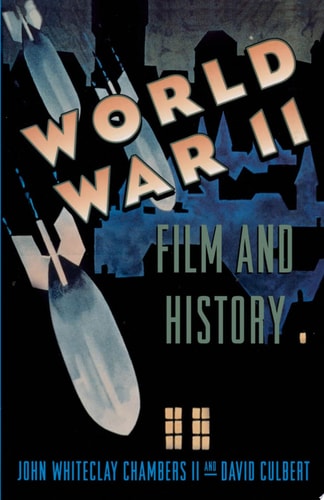
World War II, Film, and History
0
0
As an Amazon Associate and affiliate partner, Menrva Books earns from qualifying purchases. Learn more
Author Description
The immediacy and perceived truth of the visual image, as well as film and television's ability to propel viewers back into the past, place the genre of the historical film in a special category. War films--including antiwar films--have established the prevailing public image of war in the twentieth century. For American audiences, the dominant image of trench warfare in World War I has been provided by feature films such as All Quiet on the Western Front and Paths of Glory. The image of combat in the Second World War has been shaped by films like Sands of Iwo Jima and The Longest Day. And despite claims for the alleged impact of widespread television coverage of the Vietnam War, it is actually films such as Apocalypse Now and Platoon which have provided the most powerful images of what is seen as the "reality" of that much disputed conflict. But to what degree does history written "with lightning," as Woodrow Wilson allegedly said, represent the reality of the past? To what extent is visual history an oversimplification, or even a distortion of the past?Exploring the relationship between moving images and the society and culture in which they were produced and received, World War II, Film, and History addresses the power these images have had in determining our perception and memories of war. Examining how the public memory of war in the twentieth century has often been created more by a manufactured past than a remembered one, a leading group of historians discusses films dating from the early 1930s through the early 1990s, created by filmmakers the world over, from the United States and Germany to Japan and the former Soviet Union. For example, Freda Freiberg explains how the inter-racial melodramatic Japanese feature film China Nights, in which a manly and protective Japanese naval officer falls in love with a beautiful young Chinese street waif and molds her into a cultured, submissive wife, proved enormously popular with wartime Japanese and helped justify the
Menrva's Summary
THE THESIS
This volume investigates the extent to which cinematic representations of war shape public memory and distort historical reality. Edited by David Culbert and John Whiteclay Chambers II, the book compiles essays from a group of historians who analyze how visual media from the 1930s to the 1990s have constructed a manufactured past. The authors argue that film and television possess a unique power to define the collective perception of conflict, often superseding actual historical documentation in the public consciousness.
THE SCOPE MAP
What You Will Find
- Comparative analysis of war films from the United States, Germany, Japan, and the former Soviet Union.
- Examination of the transition from remembered history to manufactured public memory.
- Case studies of specific films, including 'China Nights', 'Sands of Iwo Jima', and 'Apocalypse Now'.
- Methodological inquiry into the relationship between moving images and the socio-cultural context of their production.
THE AUTHORITY PERSPECTIVE
Scholars and film historians frequently cite this collection as a foundational text for understanding the intersection of visual media and historiography. Readers often note the academic rigor of the essays, which provide a comprehensive framework for evaluating how cinema influences societal understanding of twentieth-century warfare.
Page Count:
208
Publication Date:
1996-10-10
Publisher:
Oxford University Press
ISBN-10:
0195099672
ISBN-13:
9780195099676
History
Media Studies
Film Studies
War
Community Tags
Similar Books