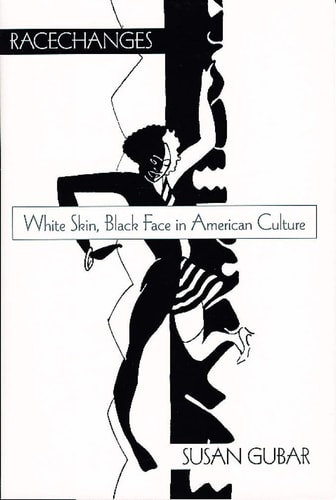
Racechanges: White Skin, Black Face in American Culture
0
0
As an Amazon Associate and affiliate partner, Menrva Books earns from qualifying purchases. Learn more
Author Description
When the actor Ted Danson appeared in blackface at a 1993 Friars Club roast, he ignited a firestorm of protest that landed him on the front pages of the newspapers, rebuked by everyone from talk show host Montel Williams to New York City's then mayor, David Dinkins. Danson's use of blackface was shocking, but was the furious pitch of the response a triumphant indication of how far society has progressed since the days when blackface performers were the toast of vaudeville, or was it also an uncomfortable reminder of how deep the chasm still is separating black and white America?In Racechanges: White Skin, Black Face in American Culture, Susan Gubar, who fundamentally changed the way we think about women's literature as co-author of the acclaimed The Madwoman in the Attic, turns her attention to the incendiary issue of race. Through a far-reaching exploration of the long overlooked legacy of minstrelsy--cross-racial impersonations or "racechanges"--throughout modern American film, fiction, poetry, painting, photography, and journalism, she documents the indebtedness of "mainstream" artists to African-American culture, and explores the deeply conflicted psychology of white guilt. The fascinating "racechanges" Gubar discusses include whites posing as blacks and blacks "passing" for white; blackface on white actors in The Jazz Singer, Birth of a Nation, and other movies, as well as on the faces of black stage entertainers; African-American deployment of racechange imagery during the Harlem Renaissance, including the poetry of Anne Spencer, the black-and-white prints of Richard Bruce Nugent, and the early work of Zora Neale Hurston; white poets and novelists from Vachel Lindsay and Gertrude Stein to John Berryman and William Faulkner writing as if they were black; white artists and writers fascinated by hypersexualized stereotypes of black men; and nightmares and visions of the racechanged baby. Gubar shows that unlike African-Americans, who often are forced to adopt whi
Menrva's Summary
THE THESIS
This work investigates the historical and psychological implications of cross-racial impersonation, or 'racechanges,' within the context of American cultural production. Susan Gubar, a distinguished scholar known for her foundational work in literary studies, utilizes a multidisciplinary approach to analyze how white artists have historically appropriated African-American identity. By examining the tension between white guilt and the persistent influence of minstrelsy, Gubar argues that these performances reveal deep-seated fissures in the American racial landscape.
THE SCOPE MAP
What You Will Find
- An analysis of cross-racial impersonation across film, literature, poetry, painting, and photography.
- A historical examination of minstrelsy and its enduring influence on mainstream American art.
- Case studies ranging from early 20th-century vaudeville to the Harlem Renaissance and modern cinema.
- An exploration of the psychological dynamics of 'passing' and the appropriation of racial stereotypes.
THE AUTHORITY PERSPECTIVE
Scholars and critics recognize this text as a significant contribution to the study of racial representation in American media. Readers frequently note the academic density of the prose and the breadth of the primary sources analyzed by the author.
Page Count:
356
Publication Date:
1997-05-22
Publisher:
Oxford University Press
ISBN-10:
0195110021
ISBN-13:
9780195110029
History
Arts American
English & College Success
American Studies
United States
Sociology
Racism
English
Race Relations
Race Awareness
American Arts
Ethnic Studies
Literary Criticism
In literature
Community Tags
Similar Books