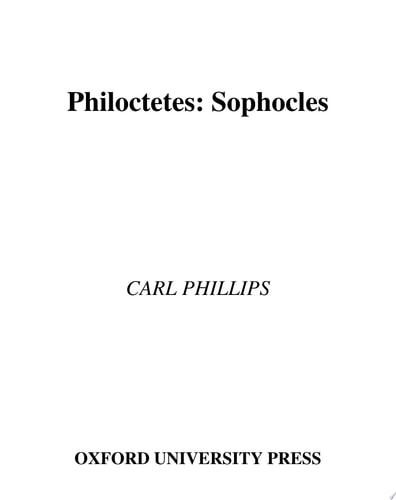
Philoctetes
0
0
As an Amazon Associate and affiliate partner, Menrva Books earns from qualifying purchases. Learn more
Author Description
Based on the conviction that only translators who write poetry themselves can properly re-create the celebrated and timeless tragedies of Aeschylus, Sophocles, and Euripides, the Greek Tragedy in New Translations series offers new translations that go beyond the literal meaning of the Greek in order to evoke the poetry of the originals. Under the general editorship of Peter Burian and Alan Shapiro, each volume includes a critical introduction, commentary on the text, full stage directions, and a glossary of the mythical and geographical references in the play.En route to fight the Trojan War, the Greek army has abandoned Philoctetes, after the smell of his festering wound, mysteriously received from a snakebite at a shrine on a small island off Lemnos, makes it unbearable to keep him on ship. Ten years later, an oracle makes it clear that the war cannot be won without the assistance of Philoctetes and his famous bow, inherited from Hercules himself. Philoctetes focuses on the attempt of Neoptolemus and the hero Odysseus to persuade the bowman to sail with them to Troy. First, though, they must assuage his bitterness over having been abandoned, and then win his trust. But how should they do this--through trickery, or with the truth? To what extent do the ends justify the means? To what degree should personal integrity be compromised for the sake of public duty? These are among the questions that Sophocles puts forward in this, one of his most morally complex and penetrating plays.
Menrva's Summary
THE PULSE
The Greek army must retrieve the abandoned hero Philoctetes and his legendary bow to secure victory in the Trojan War, forcing a confrontation between moral integrity and political necessity. Odysseus and the young Neoptolemus arrive on the desolate island of Lemnos, tasked with securing the bowman's cooperation after ten years of his exile. Philoctetes, suffering from a festering, magical wound, remains deeply embittered by his former comrades' betrayal. The narrative unfolds as a tense psychological struggle, pitting the pragmatic, manipulative tactics of Odysseus against the burgeoning conscience of Neoptolemus, who must decide whether to deceive the suffering hero or honor his own sense of justice.
INSIDE THE PAGES
- Exploration of the moral conflict between personal integrity and public duty
- Examination of the ethics of deception versus honesty in political leadership
- Use of the bow of Hercules as a symbol of both power and isolation
- Focus on the psychological impact of long-term physical suffering and social abandonment
- Dynamic character arc for Neoptolemus as he navigates conflicting loyalties
- Integration of Greek mythological context and divine prophecy
- Structured dialogue reflecting the conventions of classical Athenian tragedy
- Thematic emphasis on the consequences of utilitarian decision-making
THE COLLECTIVE ECHO
Discussion often centers on the play's stark examination of moral ambiguity and the shifting nature of heroism. Readers frequently highlight the contrast between the cold, pragmatic machinations of Odysseus and the internal struggle of Neoptolemus. Critics often note that the play remains relevant due to its focus on the human cost of political objectives and the difficulty of maintaining personal ethics in a compromised world. The pacing is praised for its tight focus on the island setting, which intensifies the psychological pressure on the characters. This translation is frequently cited for its ability to capture the poetic rhythm of the original Greek while maintaining accessibility for modern audiences.
Page Count:
128
Publication Date:
2003-09-18
Publisher:
Oxford University Press
ISBN-10:
0195136578
ISBN-13:
9780195136579
Politics
Philosophy
Drama
Greek Tragedy
Dramas & Plays
Kindle eBooks
Dramatic works
Classical
Mythology
Greek & Roman
Categories
Plays
Kindle Store
Community Tags
Other Editions(17)

Wyatt North
2021
Default edition
CreateSpace Independent Publishing Platform
2017

CreateSpace Independent Publishing Platform
2016

Dancing Unicorn Books
2016

Hackett Publishing Company, Incorporated
2014
RareBooksClub.com
2012

Kessinger Publishing, LLC
2010

Kessinger Publishing, LLC
2010

Dodo Press
2010

Digireads.com
2009
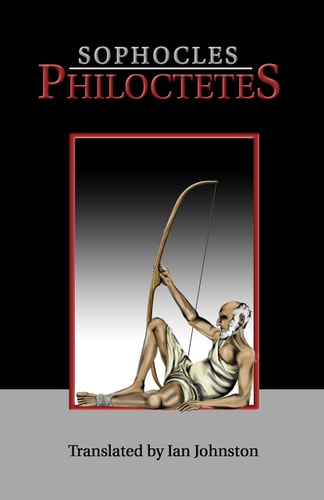
Richer Resources Publications
2009

Kessinger Publishing
2004

Kessinger Publishing
2004
Oxford University Press
2003
Players Press
1999

Walter de Gruyter GmbH
1998

Goldsmith Press
1998
Similar Books









Reader Comments
Share Your Thoughts
No comments yet. Be the first to share your thoughts!