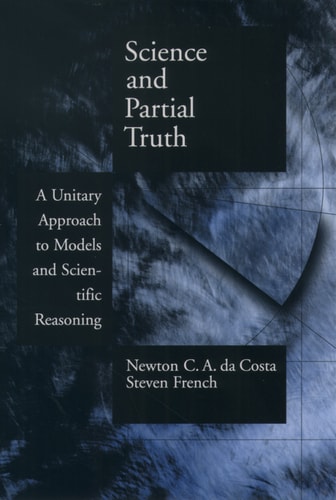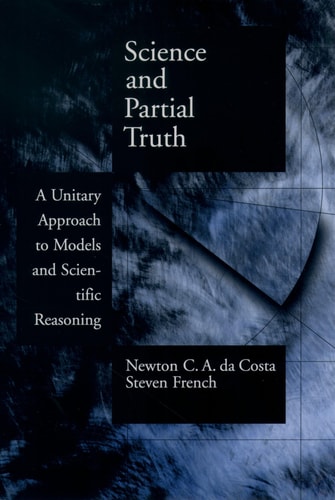
Science and Partial Truth: A Unitary Approach to Models and Scientific Reasoning
0
0
As an Amazon Associate and affiliate partner, Menrva Books earns from qualifying purchases. Learn more
Author Description
In the past thirty years, two fundamental issues have emerged in the philosophy of science. One concerns the appropriate attitude we should take towards scientific theories--whether we should regard them as true or merely empirically adequate, for example. The other concerns the nature of scientific theories and models and how these might best be represented.In this ambitious book, da Costa and French bring these two issues together by arguing that theories and models should be regarded as partially rather than wholly true. They adopt a framework that sheds new light on issues to do with belief, theory acceptance, and the realism-antirealism debate. The new machinery of "partial structures" that they develop offers a new perspective from which to view the nature of scientific models and their heuristic development. Their conclusions will be of wide interest to philosophers and historians of science.
Menrva's Summary
THE THESIS
This work investigates how scientific theories and models should be interpreted, specifically proposing a framework of partial truth to resolve debates regarding scientific realism. The authors, Steven French and Newton C. A. da Costa, utilize formal logic and structuralist philosophy to address the tension between empirical adequacy and theoretical truth. By introducing the concept of partial structures, they provide a mechanism for understanding how models function in scientific practice without requiring them to be wholly true in a traditional sense.
THE SCOPE MAP
What You Will Find
- A formal framework for partial structures in scientific modeling
- An analysis of the realism versus antirealism debate in philosophy of science
- A methodology for evaluating theory acceptance and belief
- Case studies applying the partial truth approach to heuristic development
THE AUTHORITY PERSPECTIVE
Experts recognize this text as a significant contribution to the structuralist school of philosophy of science. Readers frequently note the technical density of the prose, which requires a strong background in formal logic and philosophy.
Page Count:
272
Publication Date:
2003-09-18
Publisher:
Oxford University Press
ISBN-10:
019515651X
ISBN-13:
9780195156515
Philosophy
Science
Epistemology
Science
Reasoning