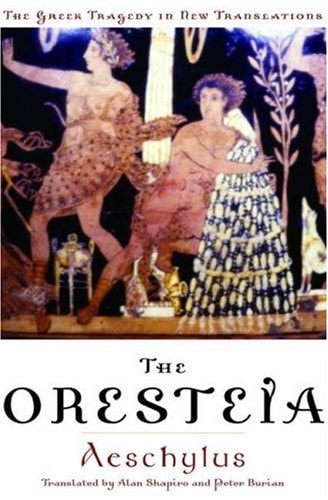
The Oresteia
0
0
As an Amazon Associate and affiliate partner, Menrva Books earns from qualifying purchases. Learn more
Author Description
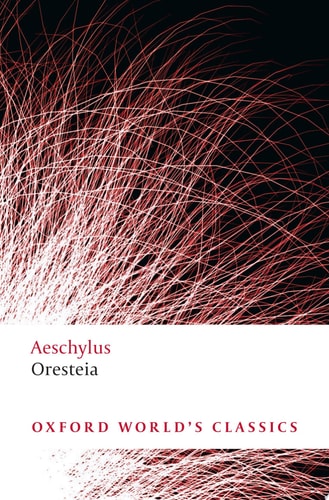
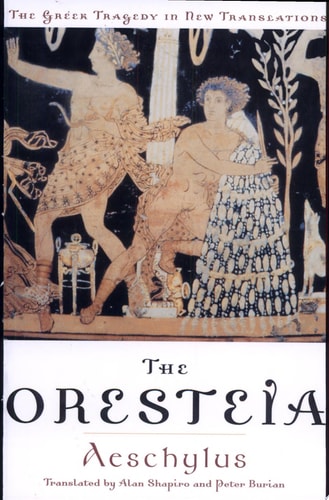
The Oresteia by Aeschylus, the only extant trilogy among the Greek tragedies, is one of the great foundational texts of Western culture. Beginning with Agamemnon, which describes Agamemnon's return from the Trojan War and his murder at the hands of his wife Clytemnestra, and continuing through Orestes' murder of Clytemnestra in Libation Bearers and his acquittal at Athena's court in Eumenides, the trilogy traces the evolution of justice in human society from blood vengeance to the rule of law. The story of the house of Atreus is a tale of incest, adultery, human sacrifice, cannibalism, and political intrigue. It is also a story in which human action is simultaneously willed and determined.In this new translation the strangeness of the original Greek and its enduring human truth come alive in language that is remarkable for its unrelenting poetic intensity, its rich metaphorical texture, and a verbal density that can at times modulate into the simplest expressions. The precise but complicated rhythms of this translation honor the music of the original Greek, bringing into unforgettable English the Aeschylean vision of a world fraught with spiritual and political tensions, a world in which justice is a cosmic balance that inevitably rights itself both by means of and despite the evil deeds of characters who claim to act on justice's behalf.
Menrva's Summary
THE PULSE
The House of Atreus faces a cycle of generational violence that demands a transition from primitive blood vengeance to the establishment of civic law. Following the return of Agamemnon from the Trojan War, the narrative tracks the brutal murder of the king by his wife, Clytemnestra, and the subsequent quest for retribution undertaken by their son, Orestes. The trilogy operates within a framework of Greek tragedy, utilizing a chorus to provide moral commentary while the protagonists navigate the tension between divine decree and human agency. The narrative structure moves from the domestic sphere of Argos to the public, judicial setting of Athens, illustrating the evolution of societal order.
INSIDE THE PAGES
- Utilization of the traditional Greek chorus to represent communal perspective and moral anxiety.
- Exploration of the transition from archaic blood feuds to institutionalized legal systems.
- Integration of divine intervention through the figures of Apollo and Athena.
- Use of complex metaphorical language to mirror the internal psychological states of the characters.
- Examination of the tension between individual will and predetermined fate.
- Structural progression across three distinct plays: Agamemnon, The Libation Bearers, and The Eumenides.
- Focus on the themes of hereditary guilt and the corruption of familial bonds.
- Application of rhythmic, poetic verse to heighten the dramatic intensity of the dialogue.
THE COLLECTIVE ECHO
Readers and critics frequently highlight the translation's success in capturing the stark, visceral intensity of the original Greek verse. Discussion often centers on the trilogy's role as a foundational exploration of justice and the moral complexities inherent in the transition from vengeance to law. Many observers note that the balance between the characters' personal motivations and the overarching cosmic forces remains a primary point of interest for modern audiences. The work is widely regarded as a rigorous examination of how societies reconcile past atrocities with the necessity of future stability.
Page Count:
304
Publication Date:
2003-05-29
Publisher:
Oxford University Press
ISBN-10:
0195154878
ISBN-13:
9780195154870
Classics
Drama
Tragedy
Dramatic works
Plays
Greek Mythology
Community Tags
Similar Books