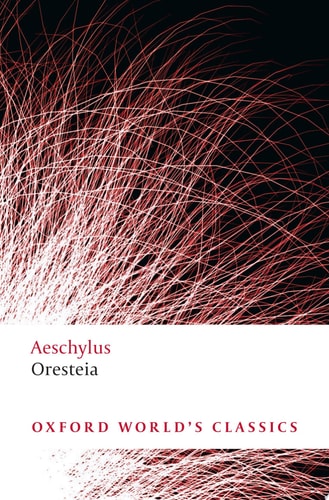
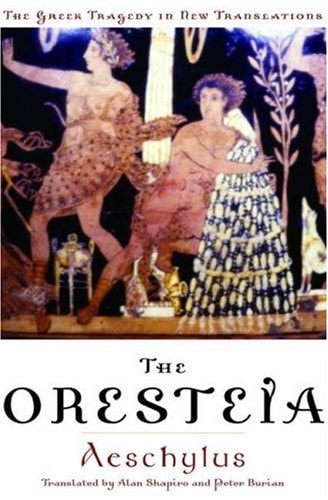
Oresteia
0
0
As an Amazon Associate and affiliate partner, Menrva Books earns from qualifying purchases. Learn more
Author Description
The Oresteia is the only trilogy of tragedy plays to survive from Ancient Greece. Agamemnon, Libation Bearers, and Eumenides have established the enduring themes of Greek tragedy--the inexorable nature of Fate, the relationship between justice, revenge, and religion. In this family history, Fate and the gods decree that each generation will repeat the crimes and endure the suffering of their forebears. When Agamemnon is murdered by his wife, Clytemnestra, their son Orestes must avenge his father's death. Only Orestes' appeal to the goddess Athena saves him from his mother's Furies, breaking the bloody chain; together gods and humans inaugurate a way of just conduct that will ensure stable families and a strong community.
Menrva's Summary
THE PULSE
The cycle of blood vengeance within the House of Atreus reaches a breaking point when Orestes is compelled by divine mandate to execute his own mother for the murder of his father. Following the return of Agamemnon from the Trojan War and his subsequent assassination by Clytemnestra, the narrative shifts to the moral and legal dilemma faced by their son, Orestes. He must navigate the conflicting demands of filial piety, which requires him to avenge his father, and the prohibition against matricide. The plays operate within a framework of Greek tragedy, utilizing a chorus to provide commentary on the actions of the gods and the moral weight of human choices. The narrative moves from the visceral reality of revenge to the establishment of a formal judicial system under the guidance of Athena.
INSIDE THE PAGES
- Utilization of a traditional Greek chorus to represent the collective voice of the city.
- Exploration of the transition from primitive blood-feud justice to institutional law.
- Examination of the influence of Olympian deities on human decision-making.
- Structural progression through three distinct acts: Agamemnon, The Libation Bearers, and The Eumenides.
- Use of dramatic irony to heighten the tension surrounding the inevitable fulfillment of fate.
- Focus on the psychological burden of inherited guilt and familial trauma.
- Incorporation of ritualistic language and formal poetic meter characteristic of Attic drama.
- Thematic contrast between the chaotic nature of the Furies and the rational order of the Athenian court.
THE COLLECTIVE ECHO
Readers and critics frequently highlight the work as a foundational pillar of Western literature, noting its profound influence on the development of dramatic structure. Discussion often centers on the shift in the trilogy from a focus on personal vengeance to the implementation of civic justice. Scholars emphasize the effectiveness of the atmosphere, which balances the raw intensity of the characters' suffering with the philosophical questions posed by the gods. Many readers find the evolution of the Furies into the Eumenides to be a compelling resolution to the cycle of violence. The text remains a subject of intense study due to its complex layering of religious, political, and moral themes.
Page Count:
320
Publication Date:
2009-01-15
Publisher:
Oxford University Press
ISBN-10:
019953781X
ISBN-13:
9780199537815
Classics
Drama
Tragedy
Dramatic works
Plays
Greek Mythology
Community Tags
Other Editions(10)







Similar Books
Reader Comments
Share Your Thoughts
No comments yet. Be the first to share your thoughts!