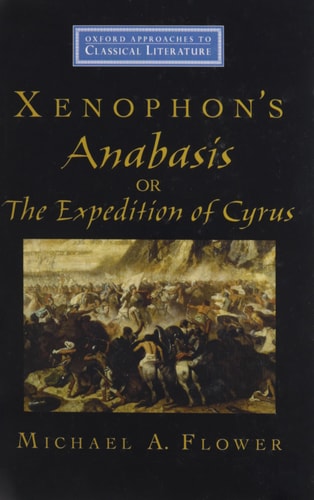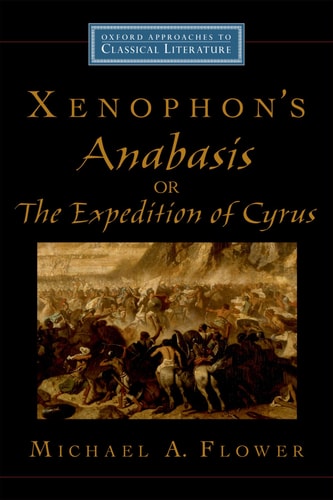
Xenophon's Anabasis, or The Expedition of Cyrus
0
0
As an Amazon Associate and affiliate partner, Menrva Books earns from qualifying purchases. Learn more
Author Description
Xenophon's Anabasis, or The Expedition of Cyrus, is one of the most exciting historical narratives--as well as the most important autobiographical work--to have survived from ancient Greece. It tells the story of Cyrus, a young and charismatic Persian prince, who in 401 BC enlisted more than ten thousand Greek mercenaries in an attempt to seize the vast Persian empire for himself. Cyrus was killed in a great battle, most of the Greek commanders subsequently fell victim to treachery, and an Athenian aristocrat by the name of Xenophon found himself in the unexpected position of taking charge and leading the Greeks from the vicinity of Babylon in modern Iraq back to the Greek cities in Turkey. This book both places the Anabasis in its historical and literary context and, by employing a variety of critical methods, opens up for the reader different ways of interpreting its major themes. Interrelated chapters investigate Xenophon's self-representation as a model leader, his possible didactic and apologetic purposes for writing, the generic expectations of his contemporary audience, the factual accuracy of the Anabasis, and the ways in which the gods are depicted as intervening in human affairs. This book unveils the literary artistry and narrative strategies that have gone into shaping one of the greatest survival stories of all time.
Menrva's Summary
THE THESIS
This book investigates the historical, literary, and didactic significance of Xenophon's Anabasis, analyzing how the text functions as both a survival narrative and a complex piece of self-representation. Michael A. Flower, a scholar of ancient Greek history, utilizes a multidisciplinary approach to examine the text's composition and intent. By situating the work within its fourth-century BC context, Flower evaluates the tension between factual historical reporting and the author's strategic narrative choices. The study provides a framework for understanding how Xenophon constructed his own image as a leader while navigating the generic expectations of his contemporary audience.
THE SCOPE MAP
What You Will Find
- Historical analysis of the 401 BC expedition of Cyrus the Younger and the subsequent retreat of the Ten Thousand.
- Critical examination of Xenophon's self-representation and leadership persona within the text.
- Investigation into the didactic and apologetic purposes behind the author's writing style.
- Discussion of the role of divine intervention and religious themes in the narrative.
- Evaluation of the text's factual accuracy compared to known historical events.
THE AUTHORITY PERSPECTIVE
Scholars and students of classical literature frequently cite this work as a vital resource for understanding the complexities of Xenophon's narrative strategies. The text is noted for its ability to bridge the gap between historical inquiry and literary analysis, making it a standard reference for those studying ancient Greek prose.
Page Count:
272
Publication Date:
2012-07-18
Publisher:
Oxford University Press
ISBN-10:
0195188683
ISBN-13:
9780195188684
History
Biography
Xenophon
Greece
Military History
Literary Criticism
Ancient History
Greece historiography