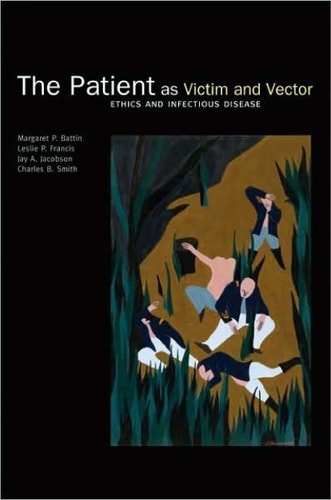
The Patient as Victim and Vector: Ethics and Infectious Disease
0
0
As an Amazon Associate and affiliate partner, Menrva Books earns from qualifying purchases. Learn more
Author Description
Bioethics emerged at a time when infectious diseases were not a major concern. Thus bioethics never had to develop a normative framework sensitive to situations of disease transmission. The Patient as Victim and Vector explores how traditional and new issues in clinical medicine, research, public health, and health policy might look different in infectious disease were treated as central. The authors argue that both practice and policy must recognize that a patient with a communicable infectious disease is not only a victim of that disease, but also a potential vector- someone who may transmit an illness that will sicken or kill others. Bioethics has failed to see one part of this duality, they document, and public health the other: that the patient is both victim and vector at one and the same time. The Patient as Victim and Vector is jointly written by four authors at the University of Utah with expertise in bioethics, health law, and both clinical practice and public health policy concerning infectious disease. Part I shows how the patient-centered ethic that was developed by bioethics- especially the concept of autonomy- needs to change in the context of public health, and Part II develops a normative theory for doing so. Part III examines traditional and new issues involving infectious disease: the ethics of quarantine and isolation, research, disease screening, rapid testing, antibiotic use, and immunization, in contexts like multi-drug-resistant tuberculosis, syphilis, hepatitis, H.I.V./A.I.D.S., and H.P.V. Part IV, beginning with a controversial thought experiment, considers constraint in the control of infectious disease, include pandemics, and Part V 'thinks big' about the global scope of infectious disease and efforts to prevent, treat, or eradicate it. This volume should have a major impact in the fields of bioethics and public health ethics. It will also interest philosophers, lawyers, health law experts
Menrva's Summary
THE THESIS
This work investigates the critical failure of traditional bioethics to address the dual nature of patients who are simultaneously victims of infectious disease and vectors for its transmission. The authors, a multidisciplinary team from the University of Utah, argue that current medical ethics frameworks—heavily reliant on individual autonomy—are insufficient for public health crises. By integrating clinical practice, legal theory, and public health policy, the text proposes a new normative framework that balances individual rights with the collective necessity of disease control.
THE SCOPE MAP
What You Will Find
- A critical analysis of patient-centered autonomy versus public health requirements.
- A normative theory for managing infectious disease transmission in clinical settings.
- Case studies involving tuberculosis, syphilis, hepatitis, HIV/AIDS, and HPV.
- Ethical examinations of quarantine, isolation, rapid testing, and immunization policies.
THE AUTHORITY PERSPECTIVE
Experts recognize this volume as a significant contribution to the intersection of bioethics and public health policy. Readers frequently note the academic density of the prose, which serves as a foundational text for scholars and practitioners navigating the ethical complexities of communicable disease management.
Page Count:
576
Publication Date:
2008-10-31
Publisher:
Oxford University Press, U.S.A.
ISBN-10:
019533583X
ISBN-13:
9780195335835
World Health
Medical policy
Public Health
Ethics
Medicine
Epidemics
Law
Bioethics
Infectious Disease
Community Tags
Other Editions(2)
Similar Books










Reader Comments
Share Your Thoughts
No comments yet. Be the first to share your thoughts!