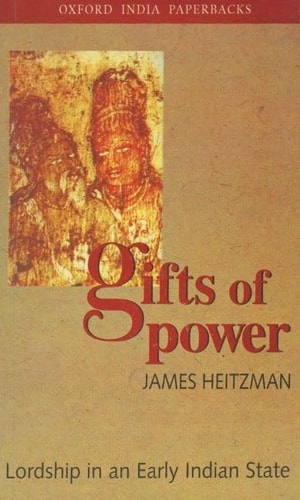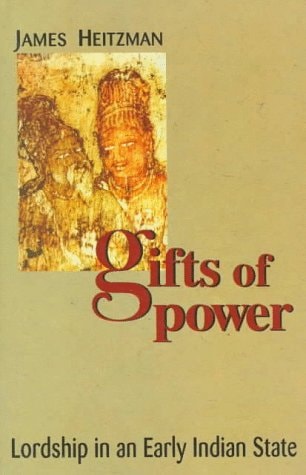
Gifts of Power: Lordship in an Early Indian State
0
0
As an Amazon Associate and affiliate partner, Menrva Books earns from qualifying purchases. Learn more
Author Description
This study of state formation, religious institutions, and the economy during the Chola period in South India (9th-13th centuries) uses locational and statistical methods to analyze the relationship between ritual and administration in a dynamic empire.
Menrva's Summary
THE THESIS
This study investigates how the Chola dynasty in South India integrated religious institutions and economic structures to consolidate state power between the 9th and 13th centuries. James Heitzman, a scholar of South Asian history, utilizes a combination of epigraphic data, locational analysis, and statistical modeling to challenge traditional models of centralized versus decentralized governance. By examining the interplay between temple administration and royal authority, the author argues that ritual acts served as a primary mechanism for political legitimation and resource management in a pre-modern state.
THE SCOPE MAP
What You Will Find
- Analysis of the Chola period in South India from the 9th to the 13th centuries.
- Application of locational and statistical methodologies to historical epigraphic records.
- Examination of the symbiotic relationship between Hindu temple institutions and state administration.
- Evaluation of economic distribution and land management as tools for maintaining lordship.
THE AUTHORITY PERSPECTIVE
Scholars of South Asian history recognize this work as a significant contribution to the study of early Indian state formation and the role of religious institutions in governance. Readers frequently note the academic density of the prose and the rigorous, data-driven approach the author employs to reconstruct the Chola administrative landscape.
Page Count:
292
Publication Date:
1997-12-04
Publisher:
Oxford University Press
ISBN-10:
0195639782
ISBN-13:
9780195639780
Economics
History
Religion
South India
Sociology
India