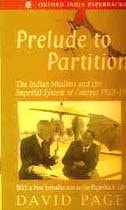
Prelude to Partition: The Indian Muslims and the Imperial System of Control
0
0
As an Amazon Associate and affiliate partner, Menrva Books earns from qualifying purchases. Learn more
Author Description
Amongst the developments flowing from the electoral institutions introduced by the constitutional reforms of 1920 was a steady increase in the communal awareness of the Muslims of India. Reprint of an important work on the period, India
Menrva's Summary
THE THESIS
This work investigates how the electoral institutions established by the 1920 constitutional reforms catalyzed communal identity and political mobilization among Indian Muslims within the British imperial system. David L. Page, a scholar of South Asian history, utilizes archival records and administrative documentation to analyze the structural impact of British governance on religious communities. He argues that the imperial framework of control, designed to manage diverse populations, inadvertently fostered the divisions that would eventually lead to the partition of the subcontinent. The text provides a detailed examination of the intersection between colonial policy and the evolving political consciousness of the Muslim population.
THE SCOPE MAP
What You Will Find
- Analysis of the 1920 constitutional reforms and their long-term political consequences.
- Examination of the British imperial administrative apparatus and its methods of communal management.
- Use of primary source documentation from colonial records and contemporary political correspondence.
- Exploration of the transition from local communal awareness to organized political movements.
THE AUTHORITY PERSPECTIVE
Reader & Expert Consensus: Historians frequently cite this work as a foundational text for understanding the institutional origins of communalism in colonial India. Scholars note the high density of the prose and the rigorous reliance on administrative data to support the author's historical arguments.
Page Count:
288
Publication Date:
1999-03-01
Publisher:
OUP India
ISBN-10:
0195645901
ISBN-13:
9780195645903
History
Colonialism
Pakistan
India
Religion and Politics
Community Tags
Similar Books