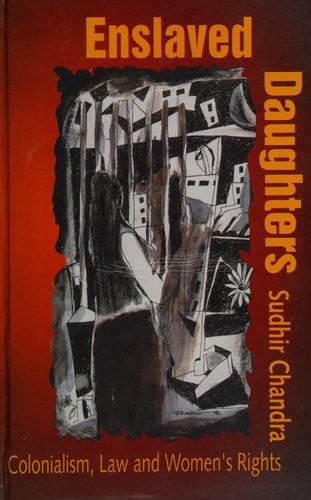
Enslaved Daughters: Colonialism, Law and Women's Rights
0
0
As an Amazon Associate and affiliate partner, Menrva Books earns from qualifying purchases. Learn more
Author Description
In 1884, the case of Rukhmabai, a twenty-five year old Hindu woman whose crusade not to be bound to an unhappy and unconsummated child-marriage, became a cause celèbre in colonial India and in Britain. It highlighted the plight of women, the injustices of child marriage, and questioning the authority--indeed the legality--of Indian marriage laws. Chandra takes this case as his raw material and goes on to examine the wider issues of colonial power, gender relations, and the law in the late 19th century.
Menrva's Summary
THE THESIS
This work investigates the intersection of colonial legal authority, gendered power dynamics, and the struggle for individual autonomy within the context of 19th-century Indian marriage laws. Sudhir Chandra, a historian specializing in colonial India, utilizes the 1884 Rukhmabai case as a focal point to analyze the broader sociopolitical tensions of the era. By examining the legal proceedings and public discourse surrounding this case, the author argues that the colonial state's intervention in domestic matters served to reinforce specific patriarchal structures while simultaneously highlighting the limitations of colonial justice. The text provides a rigorous examination of how personal agency was negotiated against the backdrop of imperial law and traditional social customs.
THE SCOPE MAP
What You Will Find
- A detailed historical analysis of the 1884 Rukhmabai legal case and its societal impact.
- An examination of the legal frameworks governing marriage in colonial India.
- Primary source analysis of contemporary debates in both India and Britain.
- A critical exploration of the relationship between colonial power and gender relations.
THE AUTHORITY PERSPECTIVE
Scholars and historians frequently cite this work as a foundational text for understanding the complexities of gender and law in colonial India. Readers often note the academic density of the prose and the author's meticulous attention to historical detail.
Page Count:
264
Publication Date:
1998-05-07
Publisher:
Oxford University Press
ISBN-10:
0195642139
ISBN-13:
9780195642131
Politics
History
Legal History
Colonialism
India
Gender Studies
Women
Community Tags
Other Editions(3)

Similar Books