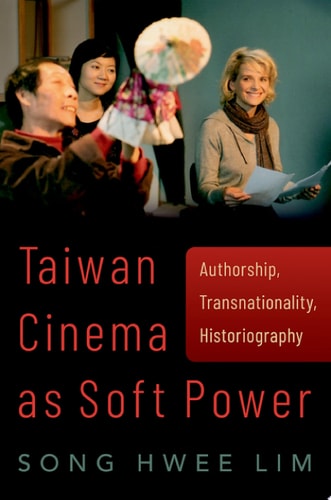
Taiwan Cinema as Soft Power: Authorship, Transnationality, Historiography
0
0
As an Amazon Associate and affiliate partner, Menrva Books earns from qualifying purchases. Learn more
Author Description
Why has Taiwanese film been so appealing to film directors, critics, and audiences across the world? This book argues that because Taiwan is a nation without hard political and economic power, cinema becomes a form of soft power tool that Taiwan uses to attract global attention, to gain support, and to build allies. Author Song Hwee Lim shows how this goal has been achieved by Taiwanese directors whose films win the hearts and minds of foreign audiences to make Taiwan a major force in world cinema.The book maps Taiwan's cinematic output in the twenty-first century through the three keywords in the book's subtitle-authorship, transnationality, historiography. Its object of analysis is the legacy of Taiwan New Cinema, a movement that begun in the early 1980s that has had a lasting impact upon filmmakers and cinephiles worldwide for nearly forty years. By examining case studies that include Hou Hsiao-hsien, Ang Lee, and Tsai Ming-liang, this book suggests that authorship is central to Taiwan cinema's ability to transcend borders to the extent that the historiographical writing of Taiwan cinema has to be reimagined. It also looks at the scaling down of soft power from the global to the regional via a cultural imaginary called "little freshness", which describes films and cultural products from Taiwan that have become hugely popular in China and Hong Kong. In presenting Taiwan cinema's significance as a case of a small nation with enormous soft power, this book hopes to recast the terms and stakes of both cinema studies and soft power studies in academia.
Menrva's Summary
THE THESIS
This book investigates how Taiwanese cinema functions as a strategic instrument of soft power to garner international recognition and political influence for a nation lacking traditional hard power assets. Author Song Hwee Lim, a scholar of film and cultural studies, utilizes a framework centered on authorship, transnationality, and historiography to analyze the global reach of Taiwan's film industry. By examining the legacy of the Taiwan New Cinema movement and contemporary cultural trends, the author argues that film serves as a vital medium for constructing a national identity that resonates across global and regional borders.
THE SCOPE MAP
What You Will Find
- Analysis of the Taiwan New Cinema movement and its enduring influence over four decades.
- Case studies of prominent directors including Hou Hsiao-hsien, Ang Lee, and Tsai Ming-liang.
- Examination of the cultural phenomenon known as "little freshness" in the context of regional soft power.
- A critical re-evaluation of how authorship and historiography shape the perception of small-nation cinema.
THE AUTHORITY PERSPECTIVE
Experts recognize this work as a significant contribution to both film studies and the academic discourse on soft power. Readers frequently note the analytical depth with which the author connects aesthetic film movements to broader geopolitical strategies.
Page Count:
244
Publication Date:
2021-12-24
Publisher:
Oxford University Press
ISBN-10:
0197503373
ISBN-13:
9780197503379
History
Film Studies
International relations
Community Tags
Similar Books