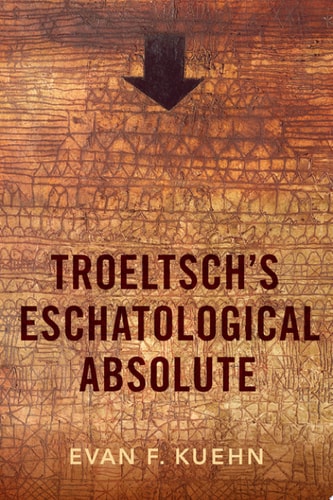
Troeltsch's Eschatological Absolute
0
0
As an Amazon Associate and affiliate partner, Menrva Books earns from qualifying purchases. Learn more
Author Description
Ernst Troeltsch Is Widely Recognized As Having Played An Important Role In The Development Of Modern Protestant Theology, But His Contribution Is Usually Understood As Largely Critical Of Traditional Modes Of Theological Inquiry. He Is Best Known For His Historicist Critique Of Dogmatic Theology, And Seen Either As The Closing Chapter Of Nineteenth-century Liberalism, Or As A Proto-postmodernist. Central To This Pivotal Period In Modern Theology Stands The Problem: How Can We Articulate A Doctrine Of Ultimate Reality Such That A Meaningful And Coherent Account Of The World Is Available Without Our Understanding Of God Thereby Becoming Conditioned By The World Itself? Evan Kuehn Demonstrates That Historiographical Assumptions About Twentieth-century Religious Thought Have Obscured The Coherence And Relevance Of Troeltsch's Understanding Of God, History, And Eschatology. An Eschatological Understanding Of The Absolute, Kuehn Contends, Stands At The Heart Of Troeltsch's Theology And The Problem Of Historicism With Which It Is Faced. Troeltsch's Eschatological Absolute Must Be Understood In The Context Of Questions That Were Being Raised At The Turn Of The Twentieth Century Both By Research On New Testament Apocalypticism, And By Modern Critical Methodologies In The Historical Sciences. His Theory Of The Absolute Is Central To His Views On Religion And Religious Ethics And Provides Practitioners Of Constructive Studies In Religion With Important Resources For Engaging With Sociological And Historical Studies, Where Troeltsch's Status As A Classical Figure Is Widely Recognized.
Menrva's Summary
THE THESIS
This book investigates how Ernst Troeltsch’s concept of the eschatological absolute provides a coherent framework for understanding God and history within the context of modern theological inquiry. Evan F. Kuehn, a scholar of modern religious thought, challenges prevailing historiographical assumptions that have historically framed Troeltsch primarily as a critic of dogma or a proto-postmodernist. By re-examining Troeltsch’s engagement with New Testament apocalypticism and historical methodology, Kuehn argues that an eschatological understanding of the absolute is the central, unifying element of Troeltsch’s theological system. This study seeks to restore the relevance of Troeltsch’s work for contemporary constructive theology and religious ethics.
THE SCOPE MAP
What You Will Find
- An analysis of the intersection between nineteenth-century liberal theology and twentieth-century historical sciences.
- A re-evaluation of Troeltsch’s engagement with New Testament apocalypticism and its influence on his doctrine of God.
- A systematic exploration of the problem of historicism and its impact on religious ethics.
- A framework for integrating sociological and historical research into constructive theological studies.
THE AUTHORITY PERSPECTIVE
Scholars in the field of modern theology recognize this work as a significant corrective to traditional interpretations of Troeltsch’s intellectual legacy. Readers frequently note the academic density of the prose, which serves as a rigorous resource for those specializing in the history of religious thought.
Page Count:
256
Publication Date:
2020-01-01
Publisher:
Oxford University Press
ISBN-10:
0197506666
ISBN-13:
9780197506660
Philosophy
History
Religion
Protestant Theology
Theology
Community Tags
Similar Books