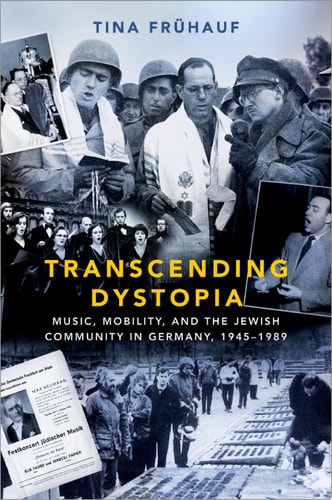
Transcending Dystopia: Music, Mobility, and the Jewish Community in Germany, 1945-1989
0
0
As an Amazon Associate and affiliate partner, Menrva Books earns from qualifying purchases. Learn more
Author Description
By the end of the Second World War, Germany was in ruins and its Jewish population so gravely diminished that a rich cultural life seemed unthinkable. And yet, as surviving Jews returned from hiding, the camps, and their exiles abroad, so did their music. Transcending Dystopia tells the story of the remarkable revival of Jewish musical activity that developed in postwar Germany against all odds. Author Tina Frühauf provides a kaleidoscopic panorama of musical practices in worship and social life across the country to illuminate how music contributed to transitions and transformations within and beyond Jewish communities in the aftermath of the Holocaust. Drawing on newly unearthed sources from archives and private collections, this book covers a wide spectrum of musical activity-from its role in commemorations and community events to synagogue concerts and its presence on the radio-across the divided Germany until the Fall of the Wall in 1989. Frühauf's use of mobility as a conceptual framework reveals the myriad ways in which the reemergence of Jewish music in Germany was shaped by cultural transfer and exchange that often relied on the circulation of musicians, their ideas, and practices within and between communities. By illuminating the centrality of mobility to Jewish experiences and highlighting how postwar Jewish musical practices in Germany were defined by politics that reached across national borders to the United States and Israel, this pioneering study makes a major contribution to our understanding of Jewish life and culture in a transnational context.
Menrva's Summary
THE THESIS
How did the revival of Jewish musical activity in postwar Germany function as a mechanism for cultural transition and community transformation between 1945 and 1989? Author Tina Frühauf, a scholar of musicology and Jewish studies, utilizes newly unearthed archival materials and private collections to examine the resurgence of Jewish musical life in a divided Germany. She argues that music served as a vital bridge for survivors, facilitating social cohesion and cultural identity formation in the wake of the Holocaust. By applying a framework of mobility, the book demonstrates how the circulation of musicians, ideas, and practices across national borders—specifically involving the United States and Israel—shaped the postwar Jewish experience.
THE SCOPE MAP
What You Will Find
- A comprehensive historical analysis of Jewish musical practices in Germany from the end of World War II to the fall of the Berlin Wall.
- A conceptual framework centered on mobility, cultural transfer, and transnational exchange.
- Primary source evidence derived from previously unexamined archives, private collections, and radio broadcast records.
- Examination of diverse musical settings, including synagogue worship, community commemorations, and public concerts.
THE AUTHORITY PERSPECTIVE
Scholars and historians identify this work as a significant contribution to the study of postwar Jewish identity and transnational cultural history. Readers frequently note the academic rigor and the depth of the research, which provides a nuanced understanding of how music functioned within a fractured society.
Page Count:
637
Publication Date:
2021-01-01
Publisher:
Oxford University Press
ISBN-10:
0197532993
ISBN-13:
9780197532997
Music
History
Religion
European History
Modern History
Humanities
Germany
Criticism history
Jewish Studies
Judaism
Music History
Community Tags
Similar Books